Apparently, somebody needs to tell the waterfront construction crews in St. Augustine, Florida, that they’re doing it wrong. They’re driving steel into mud and sand, and I don’t see them pouring concrete around it.
Sound familiar? That’s exactly what people complain about when we install driven fence posts without concrete. Yet down at the waterfront, the same basic idea is being used on a much bigger scale.
That doesn’t mean a fence and a waterfront foundation are interchangeable. It does mean concrete around a post is not the only way to hold it in the ground. Depth, spacing, soil, and installation quality deserve a whole lot more attention than they usually get.
Key Takeaways
- Waterfront piles demonstrate that driven construction can rely on soil support rather than poured concrete collars.
- Concrete alone cannot compensate for inadequate embedment or poorly compacted surrounding fill.
- A fence post flexing is not the same as its foundation moving in the ground.
The Waterfront Is Full of Driven Posts
Steel sheet piles go straight into the ground
At one St. Augustine waterfront project, the crew had a pile-driving machine that reportedly weighed about 57,000 pounds. The steel sheet piles were roughly half an inch thick.
My guess was that those sheets were going more than 20 feet into the ground. That was an estimate, not a measurement. I didn’t know the water depth or the project’s specified embedment. But the important part was easy to see: only the upper portion would remain exposed, with a substantial amount of steel driven below.
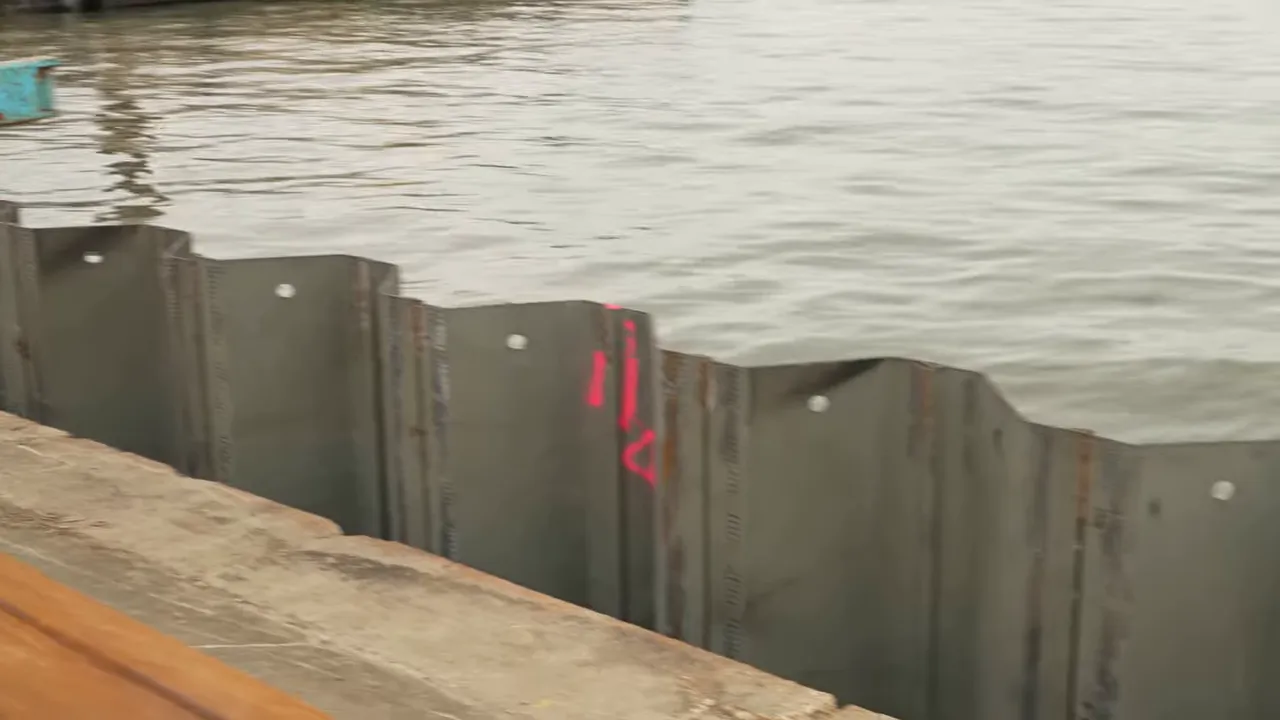
And this wasn’t some nice, dry patch of hard ground. We’re talking about waterfront mud and sand. The system relies on the driven steel interacting with the surrounding soil, not on a poured concrete collar at the surface.
So when somebody says a post can’t possibly work without concrete, I have to ask: what do they think is happening down here?
Even concrete piles can be driven
A little farther along the waterfront, there’s a building and walkway supported on concrete piles driven into the seabed. Think of them as giant fence posts with a structure sitting on top.
Here’s the distinction that matters: a concrete pile is not the same thing as concrete poured around a post. The pile itself is concrete, but its foundation support comes from how it engages the ground below.
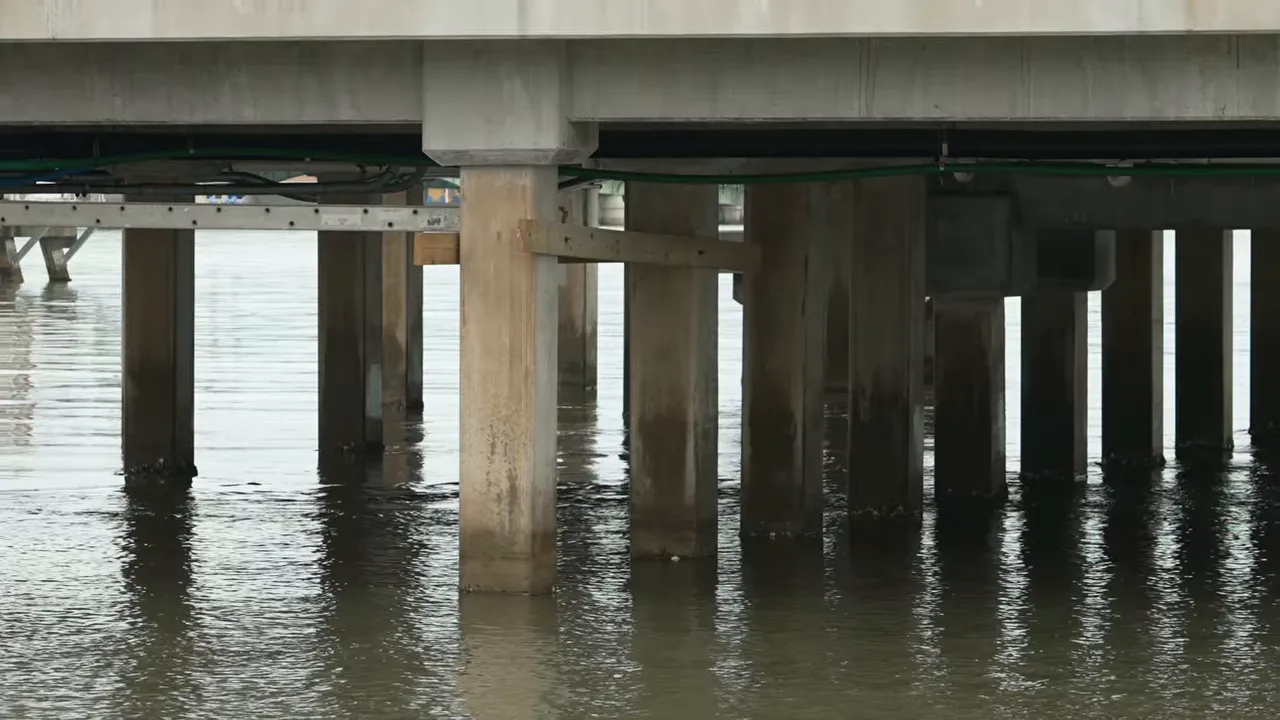
Concrete can cure underwater. Uncontrolled dilution or washout of fresh concrete is the problem, not simply the presence of water. Driving a precast pile avoids having to place fresh concrete around that pile in open water.
On these larger projects, designers can use more piles, closer spacing, and greater depth to get the support they need. Driving resistance, sometimes described as reaching refusal, can be part of evaluating installation. That’s not a rule to blindly copy onto every fence job. The useful lesson is that embedment and ground resistance matter.
Surface friction and the surrounding soil are doing real work. For additional technical background on these systems, the Federal Highway Administration’s foundation resources cover foundation engineering at a much larger scale.
Marina piles have a pretty serious job, too
The marina offers another example. Treated timber piles are driven into the bottom, and concrete piles are used there as well.
Now, who’s asking more of a post? Us with a fence, or the marina with a post helping hold a freaking pirate ship?
Different loads, different designs, absolutely. But driven construction isn’t some strange idea we dreamed up to avoid buying bags of concrete.
Concrete Didn’t Keep These Park Posts Straight
Near my old house, a park had a row of bollards installed about three years before this visit. I remember the installation because I didn’t think it was going to work. Within days, posts had already started leaning.
They had concrete. What they didn’t appear to have was enough depth.
A chain connected the posts. My suspicion was that somebody, maybe a kid leaning or pushing on the chain, had put enough sideways force on them to pull them out of alignment. I can’t prove that’s what happened, but it illustrates the problem with a shallow installation: a load applied above ground has leverage.
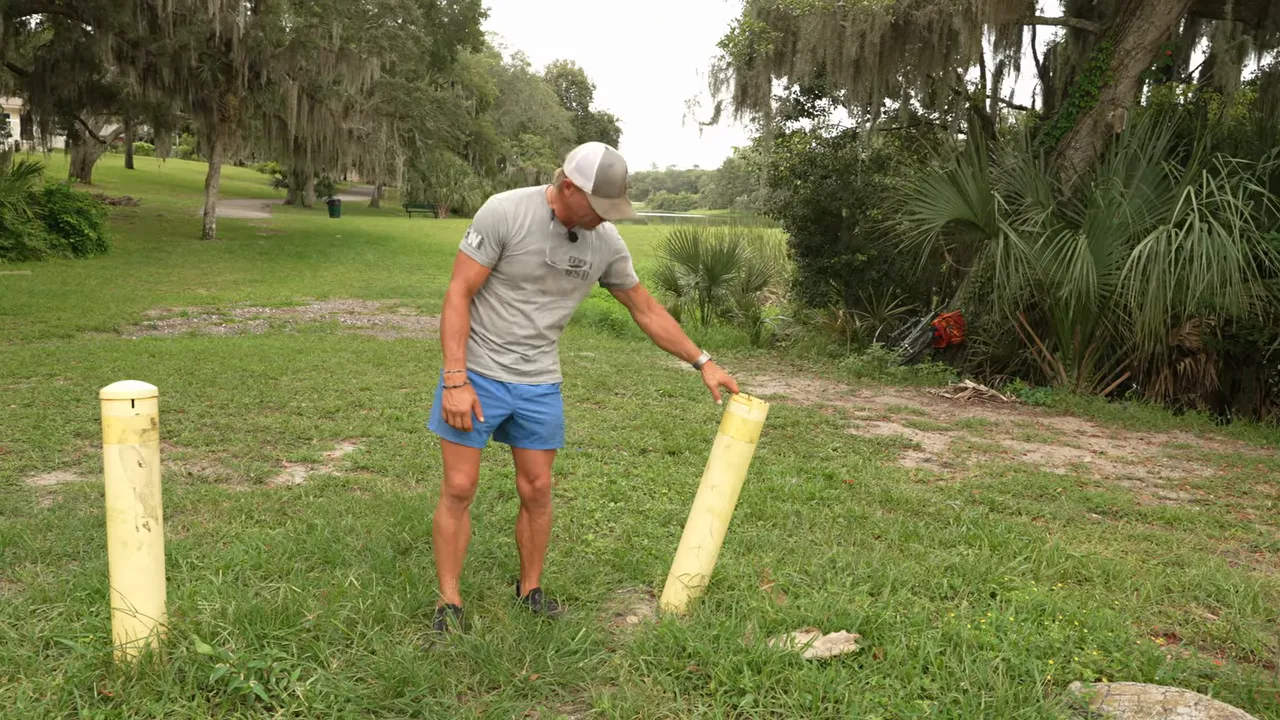
By the time I returned, some of those crooked posts felt fairly solid. The concrete and surrounding sand had settled into place. Unfortunately, they had settled with the posts leaning.
That’s not much of a victory. A post can be difficult to straighten and still be a poor installation.
Would driven posts automatically have fixed this particular job? Not necessarily. I’m not claiming that. What I am saying is that more depth deserved attention, and the concrete didn’t accomplish what people often assume it guarantees.
Loose fill is still loose fill
We see a similar issue with Florida fences all the time. An installer digs a hole, sets a post with concrete, and leaves loose sand around the installation without properly compacting it.
Then wind and rain arrive. The loose material settles, the post moves, and eventually everything firms up wherever it landed. Sometimes that means permanently crooked.
The bag of concrete doesn’t make the surrounding ground irrelevant. When evaluating a fence installation, look beyond whether concrete was used:
- Depth: Is enough of the post embedded to resist the loads above ground?
- Soil: What material is actually supporting the installation?
- Backfill: If the ground was excavated, was loose material properly compacted?
- Spacing: Does the post layout suit the demands placed on the fence?
A Driven Steel-Post Fence That’s Still Straight
Just down the street is one of the first fences I built in Florida, around 2022. It has driven steel posts and no concrete. On this return visit, it was still standing straight and looking great.
That’s a useful contrast to the park bollards. Concrete was present on the crooked installation and absent from the straight one. Neither example proves every job should use one method, but together they show why “Does it have concrete?” is the wrong question to ask by itself.
The better question is whether the whole installation works.
The Wiggle Test Doesn’t Tell the Whole Story
People love to grab a fence and shake it. Somewhere along the way, we decided that strong has to mean completely rigid and immovable.
But a little movement does not automatically mean a fence is weak. There’s a difference between a post flexing and its foundation moving in the ground. If you’re not rocking a big mass of concrete below the surface, movement at the top needs to be understood before it gets labeled a failure.
I’ve installed thousands upon thousands of these metal posts. In my own experience, I haven’t had repair calls on them, while I have seen wood posts snap off. That’s field experience, not a promise that every steel post in every soil will perform perfectly. But it’s why I don’t treat rigidity as the only measure of strength.
Being completely immovable isn’t always a great quality. Think about a stubborn spouse. Same general problem.
Judge the Installation, Not the Concrete Bag
The point isn’t that concrete is always bad or that driven fence posts are always right. The point is that concrete cannot substitute for adequate depth, suitable spacing, and proper soil support.
We’ve also pulled driven posts out of the ground using a crane scale to measure the force required. That kind of test asks a much more useful question than simply grabbing the top and giving it a wiggle.
From waterfront sheet piles to marina pilings to a backyard fence, driven construction deserves to be judged by how it’s designed, installed, and performs. Not dismissed because somebody didn’t pour a bag of concrete around it.


