People get awfully particular about how they set fence posts. Concrete is the only way. Driven posts are better. Foam is easier. Everybody has an opinion.
But what if we are spending too much time arguing about what goes around the post and not enough time thinking about how much post goes into the ground?
We put nine steel fence posts to the test using concrete, expanding foam, and direct driving at three different depths. First, I tried to identify every installation by shaking the posts without digging around them. Then we brought out our battered orange test vehicle, the General Lee, and knocked the whole row over.
Subtle? Not particularly. Useful? Absolutely. In this ground, setting depth made a bigger difference than setting method. And the posts that looked least damaged afterward were not necessarily the ones that had done the best job.
Key Takeaways
- Setting depth mattered more than setting method in our hard-packed clay test.
- All three 1-foot installations provided poor restraint, including the concrete-set post.
- Straighter pipe after impact can indicate foundation failure rather than superior strength.
- Deeper driven posts held firmly despite allowing a little movement near the ground surface.
The Setup: Nine Posts, Three Methods, Three Depths
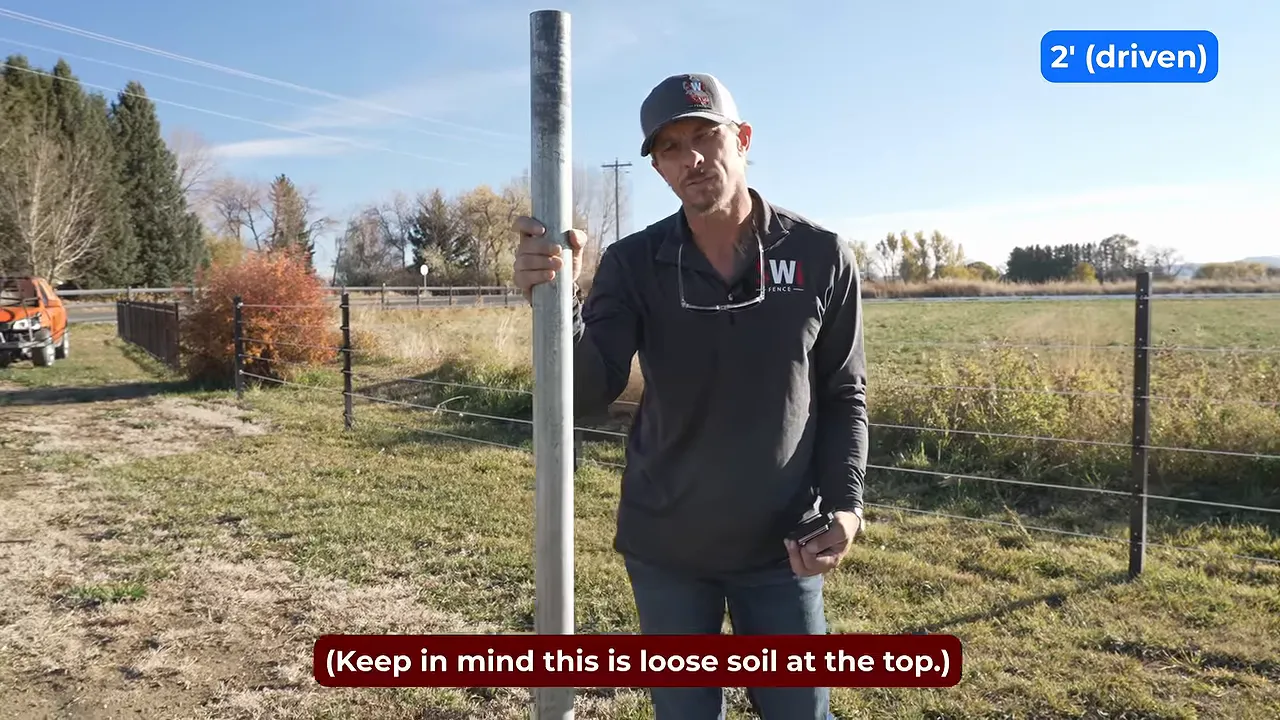
Dan prepared one post for every combination of these installation methods and depths:
- Driven posts: 1 foot, 2 feet, and 3 feet into the ground.
- Foam-set posts: 1 foot, 2 feet, and 3 feet deep.
- Concrete-set posts: 1 foot, 2 feet, and 3 feet deep.
The site was hard-packed clay, which matters. This was firm ground that offered good support for setting posts, not a loose, sandy site. Keep that in mind when interpreting the results.
Dan also worked pretty hard to keep me from cheating. He disturbed the surface around the driven posts so an untouched patch of dirt would not give them away. Instead of leaving separate spoil piles beside the dug holes, he spread the dirt along the entire row.
The pipe originally came in 8-foot lengths, so he cut the posts to different lengths. Otherwise, I could have looked at how much pipe stood above ground and worked backward to the buried depth. He even left an old, previously pounded pipe end in play as a misleading clue.
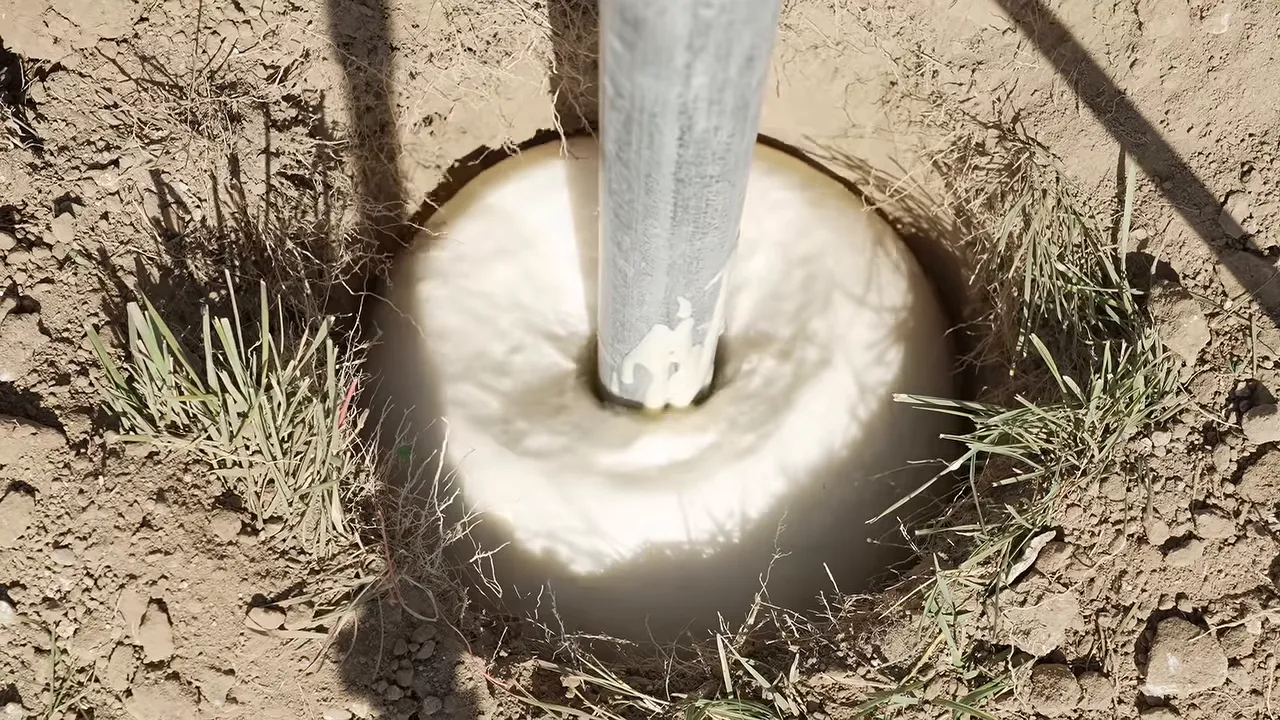
The foam went into the dug holes around the pipe, and the concrete installations received mixed concrete. After concealing the surface evidence, Dan handed the row over to me.
One practical aside from the concrete work: Dan likes Showa 377 waterproof gloves because concrete dries his hands out something fierce. Keeping that mess off your skin makes the job a lot more pleasant.
Can You Tell How a Fence Post Is Set Just by Shaking It?
My job was simple: shake each post, feel what moved, and identify both the setting method and the depth without uncovering the installation.
The 1-foot posts were easy. They had so much movement that they practically introduced themselves. The deeper installations took more thought, especially when comparing driven posts with foam.
Concrete Felt the Most Rigid
The concrete-set posts at 2 feet and 3 feet felt extremely solid. I could not detect meaningful movement at the ground surface when pushing on them by hand.
Telling those two depths apart was harder. Once the installation reached that far into this hard clay, both felt stout. That is an important distinction: two posts can feel nearly identical under a hand test without necessarily behaving identically under a much larger load.
Driven Posts Had a Little Surface Flex
The deeper driven posts were secure, but they felt different from concrete. There was a little give near the top of the ground rather than the rigid surface restraint of a concrete footing.
That small movement was the clue. A properly embedded driven post could still be doing its job even though the very top of the soil allowed some flex. In this installation, the firmer restraint was farther down, roughly 6 inches below the surface.
Foam Had More Give
The foam installations generally allowed more movement. The 2-foot foam post had quite a bit of give, while the 3-foot foam post felt substantially more secure. I could also hear a little ticking around one of the foam installations as I worked it back and forth.
The tricky comparison was the 3-foot foam post against the 2-foot driven post. Those were close enough in feel to make me second-guess myself.
After a few trips up and down the row, and some confusion that a Sharpie would have solved nicely, I settled on my final answers. Once we pulled everything out and checked, I had identified all nine correctly. I will take that win.
The Impact Test: Look at How the Posts Fail
A hand test only tells you so much. We wanted to see where the pipe bent and whether the surrounding ground held on when the load got ridiculous.
So we drove the General Lee down the row.
This was a destructive demonstration, not a calibrated engineering test. We were not measuring force or establishing a crash rating. The useful evidence was the failure pattern: did the post rotate out of the ground, bend in a broad curve, or develop a sharp kink because its buried section stayed put?
A post that stays straight while its footing tips over has not outperformed a post that bends because its foundation holds. That is the distinction that makes these results interesting.
This is also not a test to copy. For ordinary fence installation, start with safe excavation practices and use 811 to arrange utility marking before disturbing the ground.
What Happened to Each Setting Method?
Foam: More Depth Made a Clear Difference
The 2-foot foam post came out with a broad, banana-shaped curve. The 3-foot foam post developed a more pronounced kink, showing that the deeper installation restrained the pipe more firmly.
The 1-foot foam post told the opposite story. Other than the bumper damage, the pipe was nearly straight. It looked potentially reusable, but that was not a compliment to the installation. It had offered so little resistance that the impact pushed it over without seriously bending the pipe.

Foam was the weakest setting method in this group. Still, the 3-foot installation held well enough that I had trouble distinguishing it by feel from a 2-foot driven post. Depth improved its performance considerably.
Driven: The Deeper Posts Held Hard Enough to Kink
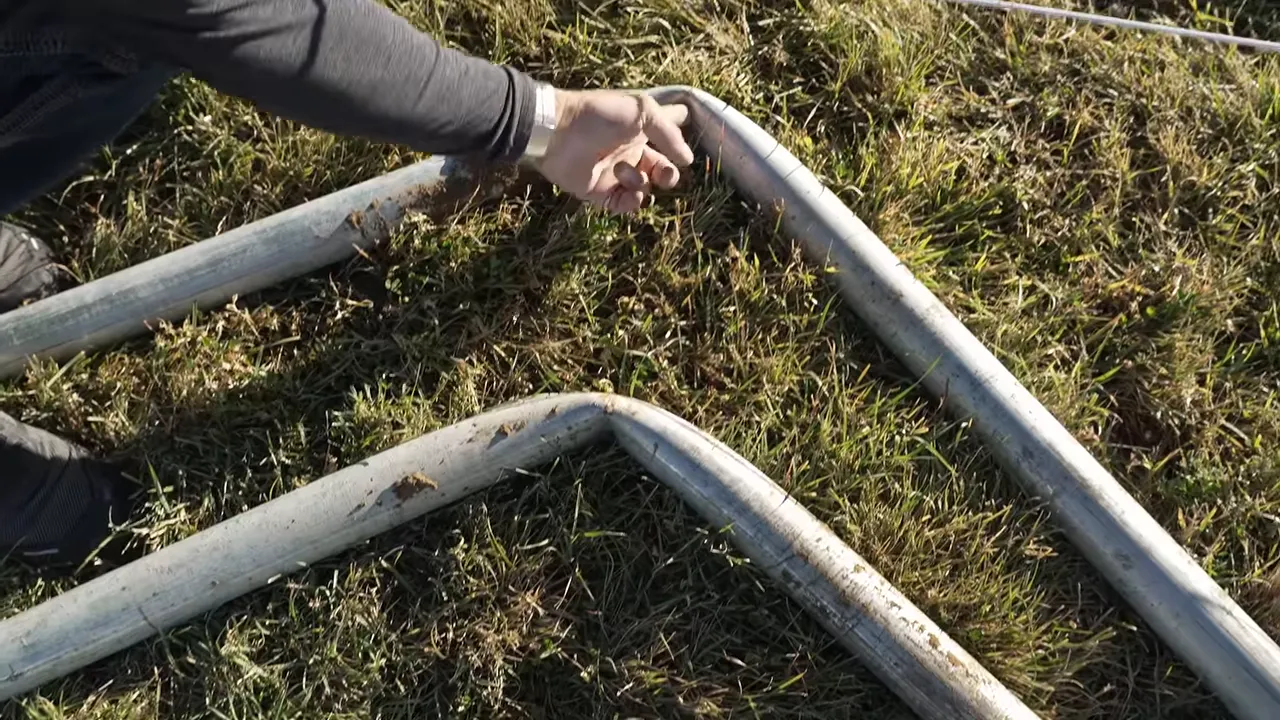
The 2-foot and 3-foot driven posts both developed substantial bends. Their performance was fairly similar, with some difference in how tightly the pipe bent.
That little bit of surface flex I felt earlier did not mean the installations were useless. Under impact, the deeper driven posts held firmly enough for the steel itself to deform badly.
The 1-foot driven post belonged with the other shallow installations. There simply was not enough embedment to provide comparable restraint.
Concrete: Strong Restraint Still Needs Enough Ground
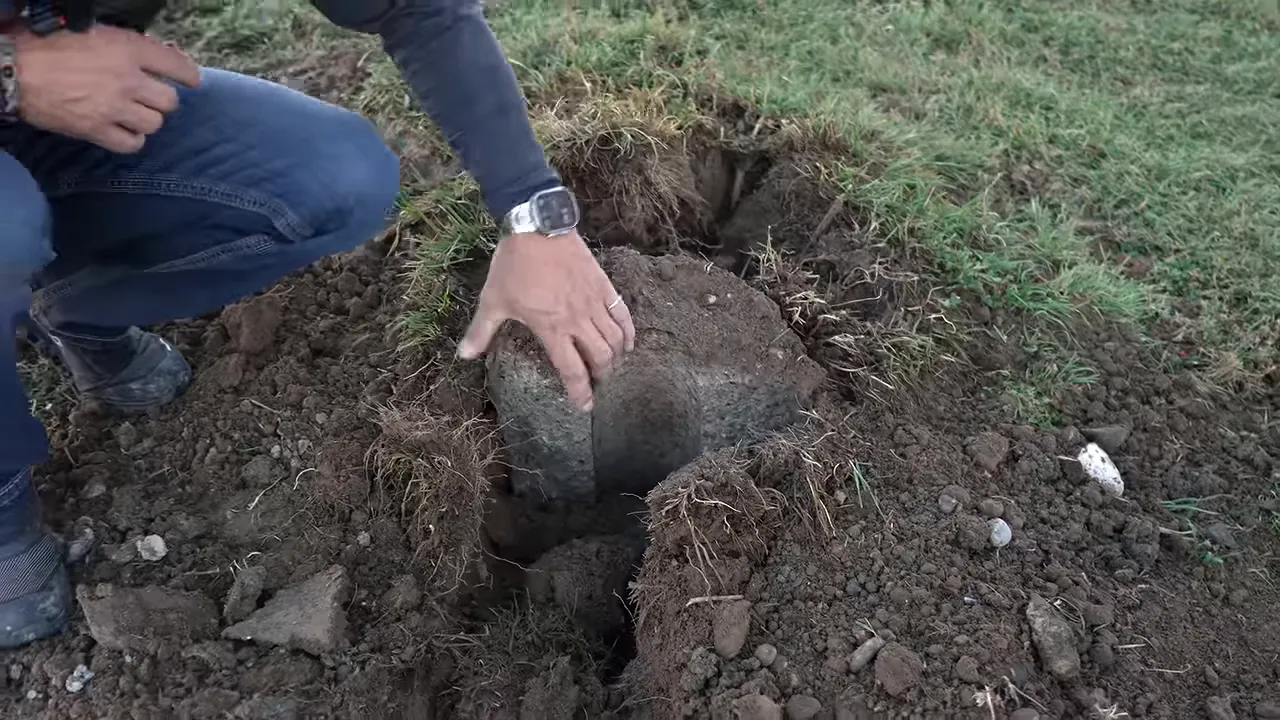
The 1-foot concrete post came out with its concrete attached and very little pipe deformation apart from the bumper dent. The concrete had not magically made the shallow installation strong. The surrounding ground gave way, allowing the footing and post to tip.
The deeper concrete installations were a different story. They held tightly enough to kink the steel severely. We needed the skid steer to extract them, and one damaged section actually broke during removal.
Once everything was out, the pattern was clear: the deeper installations across all three methods had damaged pipe that needed replacement. The shallow posts sometimes looked better only because the ground or installation had surrendered first.
What This Means for Building and Repairing a Fence
The big lesson is not that setting method makes no difference. It clearly does. Concrete felt the stiffest, driven posts had a little surface give, and foam allowed the most movement.
The lesson is that you cannot make up for inadequate depth just by changing the material around the post. All three 1-foot installations performed poorly, even in this firm clay.
Here is how I would interpret the results:
- Concrete: The deeper installations offered excellent rigidity under hand pressure, but a severe impact still kinked the pipe and left a substantial footing to remove.
- Driven: The deeper posts provided strong restraint despite some surface flex, and they would be my preference when thinking about the eventual repair.
- Foam: It offered the least restraint overall, though the 3-foot installation performed noticeably better than the shallower foam installations.
Fences get damaged. Wind bends them. Somebody backs into them. Somebody runs into them. When the steel is kinked, it needs replacing regardless of how proud you were of the original installation.
I would rather repair the driven post in this comparison. It was doing the job, and I would not have that big concrete mass to deal with afterward.
None of this establishes one universal fence post depth. We tested individual steel posts in one soil type, not every fence design or site condition. What it does establish is that depth deserves at least as much attention as the concrete-versus-driven-versus-foam argument.
The Bonus Test: A Concrete-Filled 4-Inch Pipe Post
Dan had one more surprise waiting: a heavy 4-inch pipe set in concrete and filled with concrete, more like a bollard than an ordinary fence post.
After extraction, we estimated its setting depth at about 3½ feet. The pipe appeared to have roughly a quarter-inch wall. I suspected it was drill pipe, something in the neighborhood of Schedule 80, but that was an estimate rather than a verified specification.
I expected it to fold over when I hit it.
Holy buckets, was that wrong.
The impact lifted the vehicle into the air. The vehicle remained drivable, and the fabricated bumper had not punctured the radiator. That was quite a day for our fabrication shop.
The post itself did not develop the sharp kink we saw in the smaller hollow fence posts. The footing concrete fractured and separated, but the heavy, concrete-filled pipe stayed remarkably straight.
My explanation was that the concrete filling supported the pipe against collapsing inward as it bent. Combined with the much heavier steel, that produced a very different result from the ordinary fence posts.
That does not make this a certified vehicle barrier, and it certainly does not make anything literally bulletproof. We changed pipe diameter, wall thickness, filling, and setting depth together, so this was not a clean test of concrete filling alone. But as a demonstration of how stout a heavy, concrete-filled pipe can be, it was seriously impressive.
The Bottom Line: Get the Depth Right First
If there is one thing to carry onto the next fence job, it is this: do not confuse a rigid setting material with a properly supported post.
Concrete could not rescue a 1-foot installation. Driven posts at greater depth held hard enough to kink the steel. Foam improved substantially with depth, even though it remained the weakest method in our comparison.
Pay attention to what is below ground, and pay attention to how a failed post got that way. A straight pipe lying beside a tipped footing might be evidence of a weak installation, while a badly kinked pipe might mean the buried section held on exactly as it should.
And if you enjoy getting your hands dirty and figuring out why fences work, we are also opening SWI franchise opportunities. Our focus is on areas around our existing offices so we can give new franchisees the time and attention they need as we build together.
|


