A come along will stretch fence wire. Nobody is arguing that. The real question is whether it is the most efficient tool when you are pulling wire, tying it off, releasing the stretcher, and moving to the next strand all day long.
We use chain strainers, also called boundary strainers or chain walkers. After hearing plenty of arguments that come alongs were faster, we put both tools into experienced hands at the Fall Fence Forum in Worthington, Indiana.
Our pick is the chain strainer. The biggest advantage is not just how it pulls. It is how quickly it releases and gets ready for the next wire. But the comparison also brought out some useful lessons about wire grabs, figure-eight splices, termination knots, and protecting high-tensile wire from damage.
Key Takeaways
- Chain strainers simplify repeated pulls by eliminating the cable-reset step between wires.
- A suitable wire grab must hold securely without compromising the high-tensile wire.
- Proper termination knots resist unwinding better than plain wraps under additional pull.
- Good stretching technique includes distributing tension through the run and keeping the tool aligned.
A Fair Comparison Starts With the Operator
I would not give a come along a fair shot running it myself. It is not the tool I am good at, and comparing my fumbling around with somebody else's everyday routine would not prove much.
So Jordan Tescher, a fencing contractor from North Dakota who regularly uses a come along, handled that side. Ryan Gray of Cowboy Construction in Washington handled the chain strainer.
The job was straightforward: stretch and terminate two wires, one high and one low, using an ordinary working pace. This was a practical field comparison, not a pressure-packed competition or a controlled laboratory test.
That setting mattered. Farm Fence Solutions puts on the Fall Fence Forum to help fencers improve their craft. The point was to learn something, not defend a tool just because it was already in the truck.
Joining High-Tensile Wire With a Figure-Eight Knot
Repeated pulls meant we needed to splice more wire into the run between demonstrations. That gave us a good excuse to practice a figure-eight knot.
I was learning, too. This was about my second figure-eight knot in three years, so nobody needed to judge the artistry too hard.
The basic figure-eight sequence
The knot starts with a small pigtail or open loop in one wire. The other wire weaves through it, alternating over and under to create the interlocking figure-eight shape.
- Form the first loop. Keep the loose tail identifiable so you can follow the wire through the knot.
- Weave the second wire through. Follow the over-under path around the first wire, then bring the loose end through to complete the interlocking shape.
- Set the bends and slide the knot together. The two tails should leave the center in opposite directions.
- Draw the center closed. Check the figure-eight shape before finishing the tails.
- Finish each side with two tight wraps. Follow the direction of the knot around the standing wire.
- Make a crank handle in the remaining tail and twist it off.
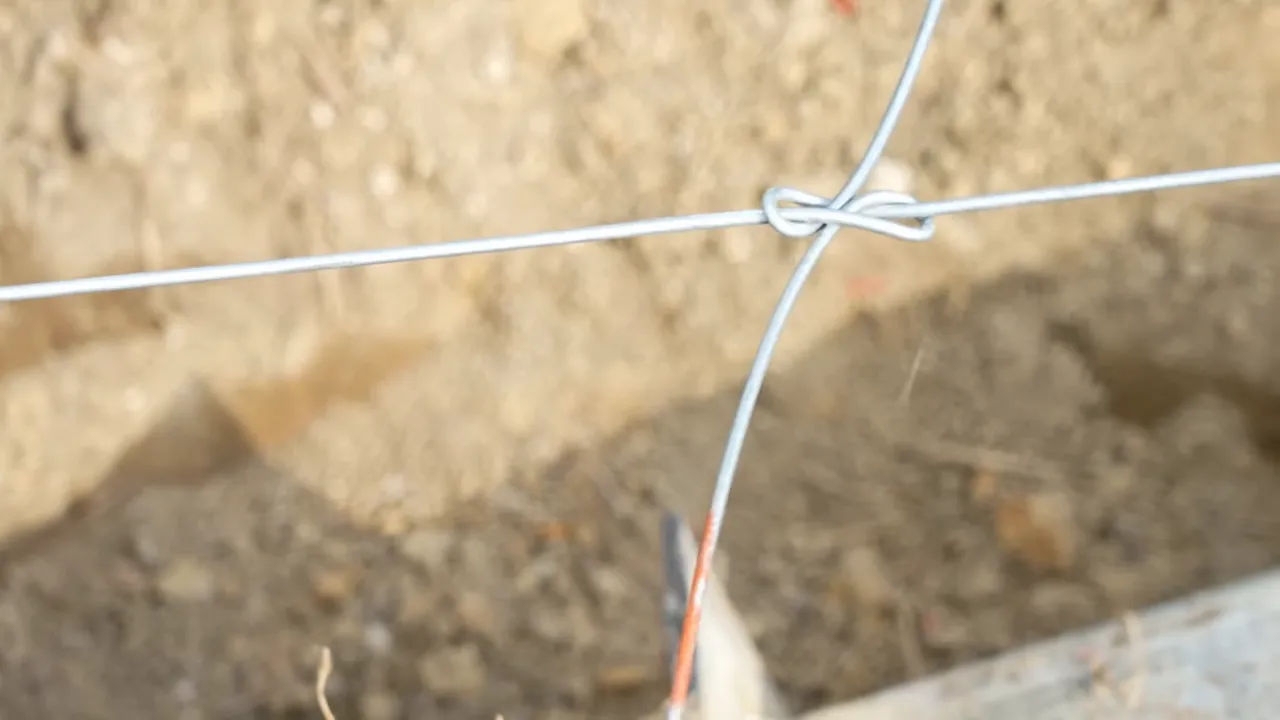
The center is the part to get right first. Finishing wraps will not fix a wire that took the wrong path through the knot.
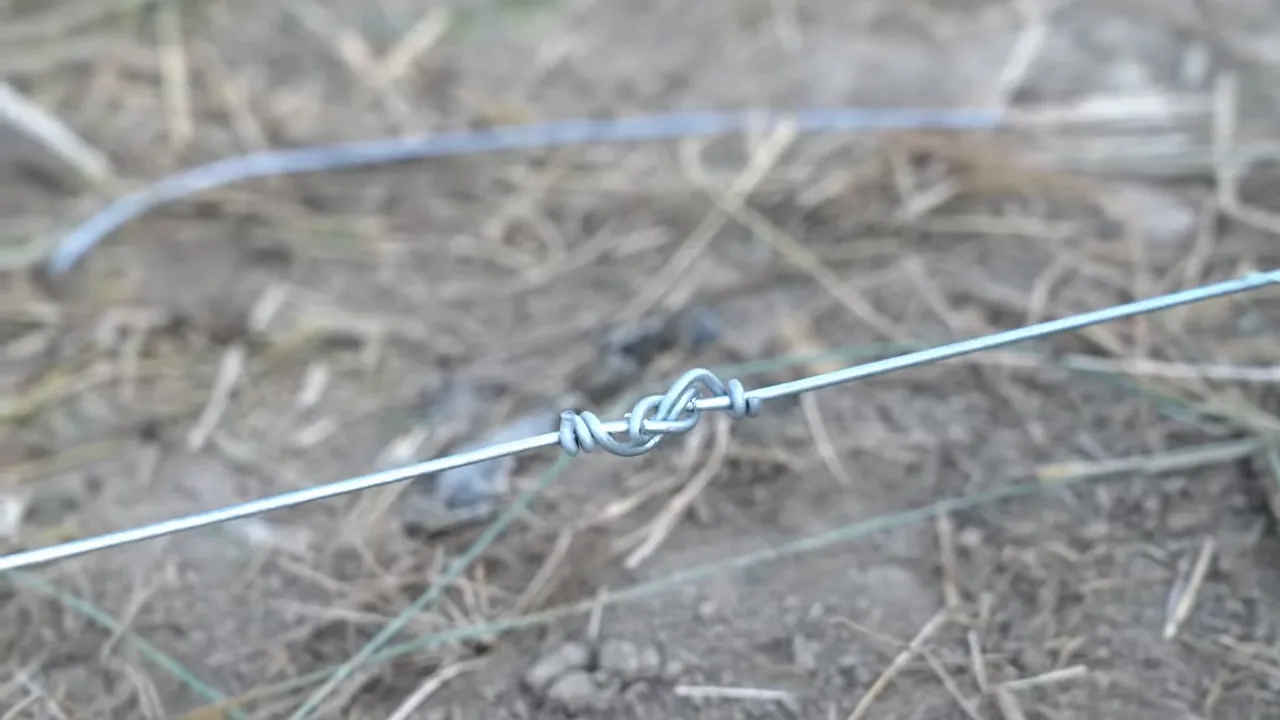
Are crimp sleeves easier?
Absolutely. If the question is simply whether there is an easier way to join the wire, crimp sleeves are the answer. They also have a strength advantage over the figure-eight knot discussed here.
But knots are part of the craft. A well-made figure-eight splice shows control of the material and an understanding of how the wire works. There is a reason a gathering full of professional fencers spends time on details like this.
Stretching Fence Wire With a Come Along
Jordan's first point was that the come along is only part of the setup. The wire grab can make or break the whole operation.
His setup used a separate clamp, often called a pork-chop grab. The wire sits inside the jaws, and the pulling force makes the grab hold tighter.
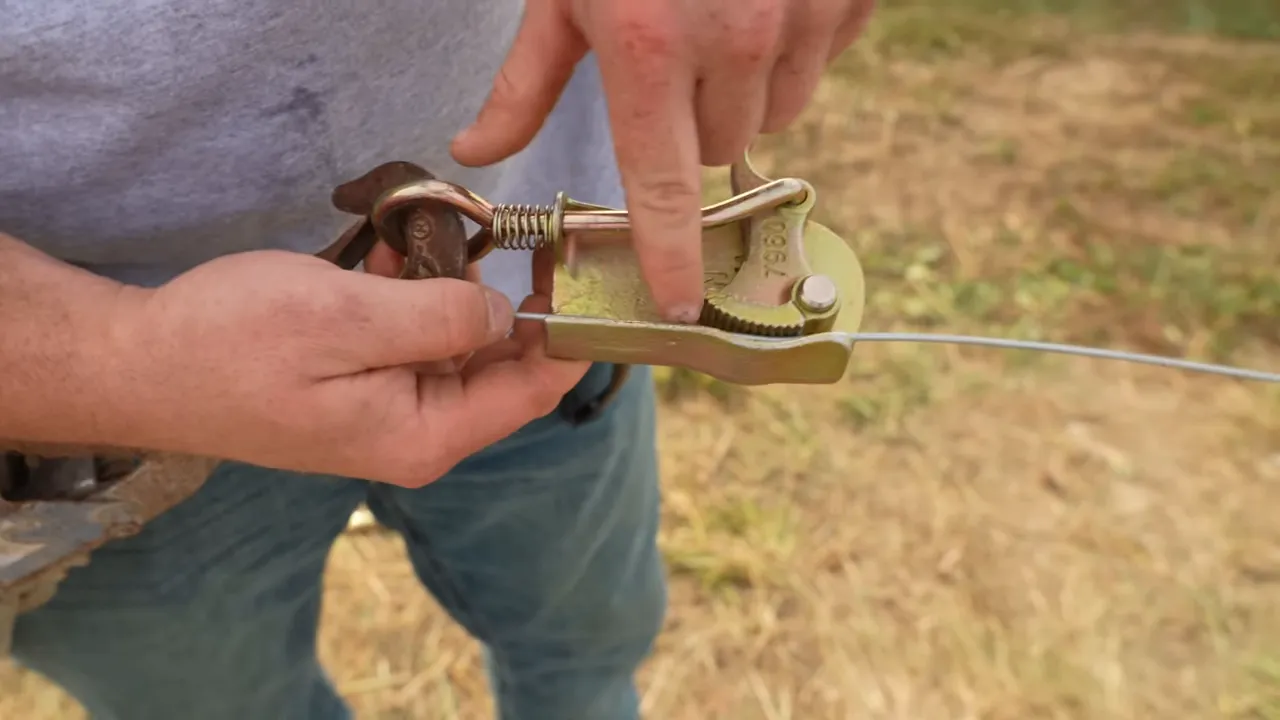
A grab that slips makes you work harder without getting the result you need. A grab that damages the wire creates another problem altogether. Choosing the right clamp is not a minor accessory decision.
Work from the top down
Jordan's crew stretches the top wire first, then works downward. That is the sequence that suits the way their wires are laid out and handled.
He also pointed out that a wire can feel tight beside the stretcher while tension has not worked evenly through the rest of the run. Ground contact, bends, and other points of resistance can keep the far end from responding the same way.
His crew lifts and shakes the wire along the run so it can move and the pull can work through it. He emphasized this particularly for barbed wire. The lesson is simple: do not judge the entire run only by the short section right beside the tool.
Keep the pull aligned
As the come along handle moves, the body and grab can be pulled out of line. Jordan demonstrated supporting the back of the assembly to keep the pull straight instead of simply yanking the handle.
That connection is carrying the load. Letting it work at an awkward angle puts stress where you do not want it. Alignment deserves attention throughout the pull, not just when you first hook up.
The cable is both an advantage and a reset chore
A come along has a useful amount of cable travel. On a long run with plenty of slack, that is a real benefit.
The catch comes afterward. Once the wire is tied off, the cable has to be released and pulled back out for the next setup. That is handling time between wires.
Jordan also noted that his crew can run out of cable travel with either high-tensile or low-carbon wire. When that happens, they have to secure the wire, reposition the grab, and pull again.
A chain walker can use a longer chain, with a 20-foot chain discussed as an option. That provides more travel without the same cable-reset routine. It does not make travel unlimited, but it changes how often you need to reposition the tool.
Why a Proper Termination Knot Matters
Stretching the wire is only half the job. If the end connection cannot hold it, the tool that got it tight is beside the point.
We compared a standard wrap with a high-tensile termination knot by applying additional pull after tying each one.
Extra wraps do not necessarily stop unwinding
For the standard wrap, we put several turns around the standing wire. It looked like enough turns ought to hold.
Under the added pull, the wrap began unwinding, and the connection failed. That is the problem with relying on a plain wrap: an impact or another load on the fence can pull harder than the original installation tension.
More turns are not a substitute for a termination that locks properly.
The termination knot stayed locked
The high-tensile termination used a locking shape followed by one looser turn and two tight turns. Bending the remaining tail into a crank handle made the finishing wraps easier to form.
When we pulled on that connection, it did not try to unwind. We kept adding load, well beyond an ordinary installation pull, until the wire broke at a compromised point near a sharp bend.
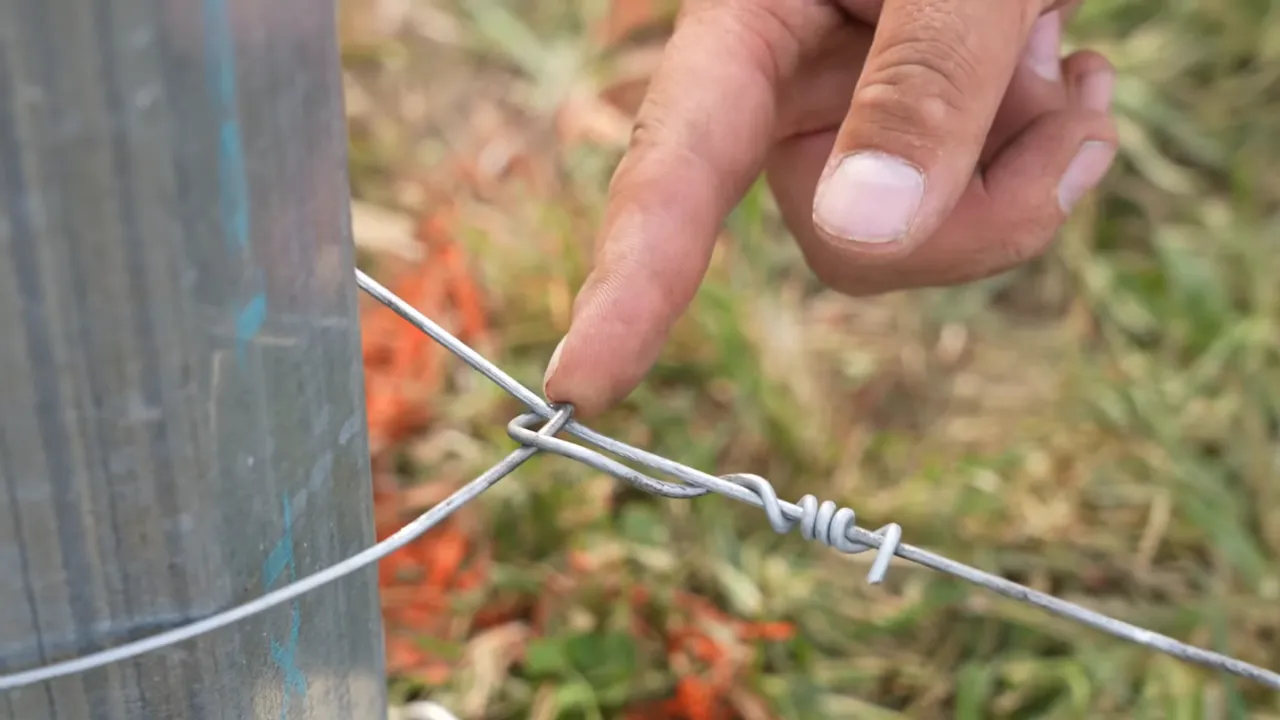
Those are two different failure modes. One connection unwound. The other stayed locked until the wire failed at a weakened area.
This was not a measured breaking-strength test, and the bending post made it clear we were pushing beyond normal fence tension. The useful lesson was the behavior of the connection, not a supposed load rating.
How a Chain Strainer Stretches Fence Wire
Ryan started with the chain strainer's wire grip. On the tool he demonstrated, the wire seats in a small recess in the gripping mechanism. He highlighted that it holds without the scoring action he wanted to avoid on high-tensile wire.
That matters because a damaged spot can become the place where the wire breaks later. Getting a solid grip is important. Getting that grip without compromising the wire is better.
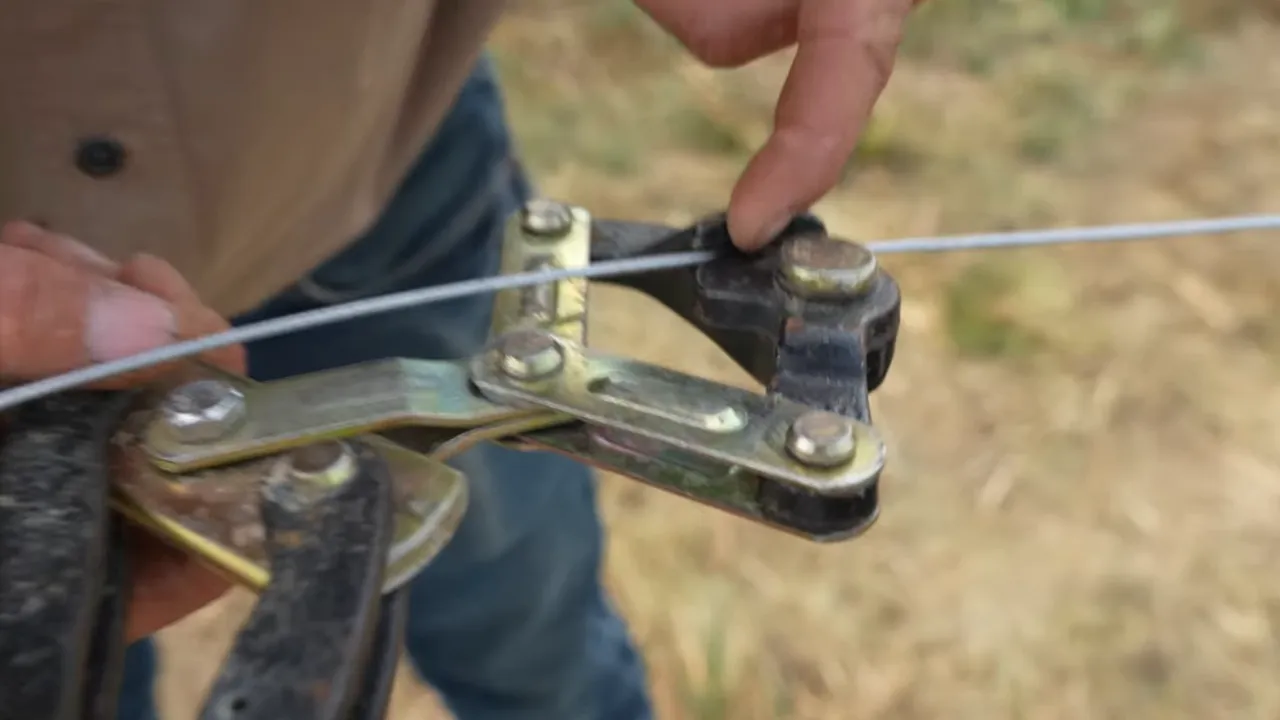
The chain-walker workflow
- Anchor the chain around the post. Set up the attachment before beginning the pull.
- Straighten the chain. Remove twists so the links feed cleanly through the walking mechanism.
- Seat the wire in the grip. Check that it is correctly positioned.
- Work the handle. The mechanism advances along the chain, taking up slack and applying tension.
- Make the termination. Tie the wire off while the strainer holds it.
- Walk the mechanism backward. Release the load in a controlled manner, then remove the grip.
- Move to the next wire. The chain is ready to attach again without pulling out a cable.
That walking action is where the nickname comes from. The handle supplies leverage while the mechanism advances along the chain.
Twist the tail toward the knot
Ryan also demonstrated a useful finishing detail. When ringing off the excess wire, rotate the tail toward the knot so the curl continues into the wraps.
Turning it the other way can start separating what you just finished. It is a small detail, but fence work is full of small details that make a difference.
A more secure chain attachment
During the demonstration, one hooked chain attachment came loose when the setup was shaken. Ryan explained that it was not his preferred arrangement.
Instead, he preferred feeding the chain through to form a loop and attaching it back to the chain. The lesson was not that the tool was at fault. It was that the way you anchor it affects how reliably the setup stays together during handling.
Chain Strainer vs. Come Along: What the Comparison Showed
The displayed demonstration times were 1 minute 36 seconds for the come along and 1 minute 4 seconds for the chain strainer. That put the chain strainer 32 seconds ahead on the demonstrated task.
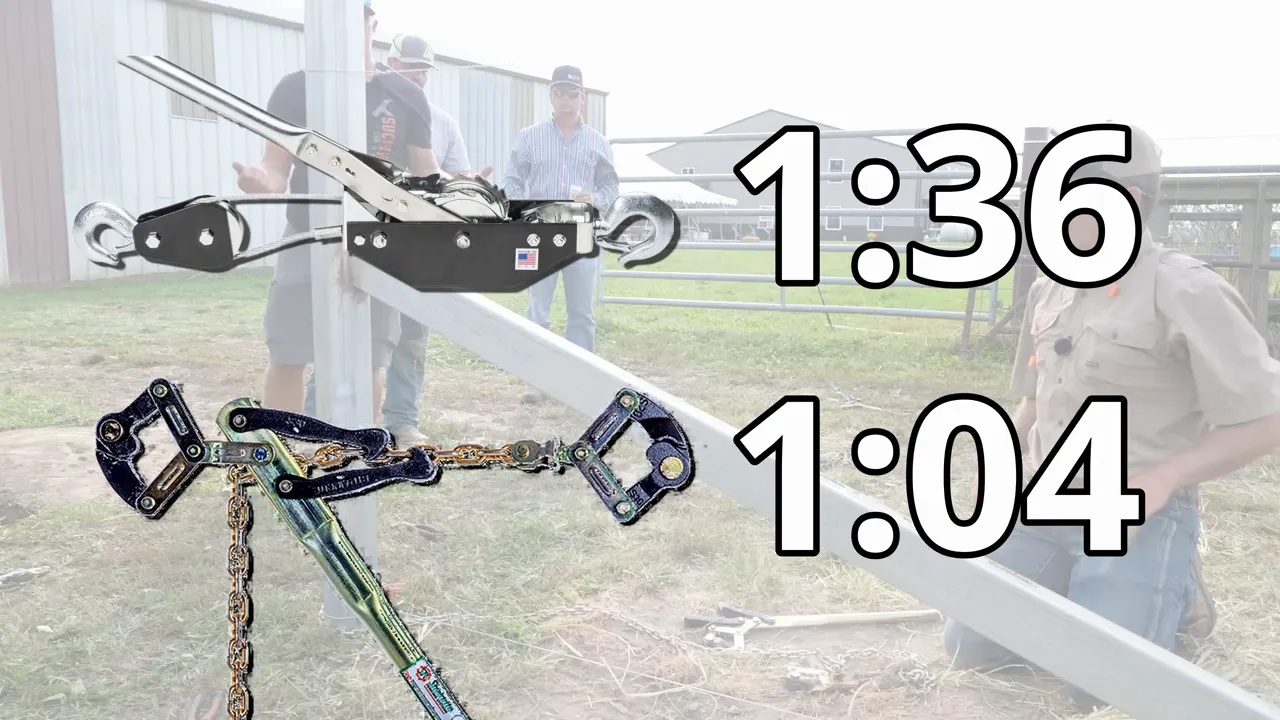
The more useful result was understanding where the difference came from:
- Less resetting between wires. The chain walker was ready to reposition once released.
- No cable to pull back out. That removed a separate handling step from the routine.
- Longer-chain flexibility. A suitable longer chain can reduce the need to stop and regrip during a long pull.
- Attention to wire condition. The demonstrated grip was designed to hold without scoring the wire.
Jordan also observed that Ryan's setup needed noticeably less stretcher movement to achieve what felt like comparable wire tension. He estimated roughly a third as much travel in that demonstration.
That was an operator's observation, not an instrumented measurement. Still, it prompted a worthwhile discussion about reducing unnecessary tool movement and avoiding damage at the gripping point. A scored wire under load is not something to ignore, whichever stretcher you use.
Jordan came away willing to reevaluate his setup. That is about the best outcome you can ask for from a practical comparison between tradespeople.
Fencing Is Evolving, and So Is Our Equipment
We did not start out using chain walkers for everything. We used come alongs, including on chain-link work, and before that there were rope-and-pulley stretchers.
Today, we have moved away from come alongs in our business and use Strainrite chain strainers because we find them more efficient. Many of the practices we are adopting have strong roots in New Zealand fencing. There is nothing wrong with learning a better way from somebody who has already worked it out.
The same willingness to change applies to wire. At SWI, high-tensile is our choice for net wire, barbed wire, and smooth wire. It got a rough reputation early on, but we are committed to it rather than low-carbon wire for our installations.
Repurposing solar-field steel as fence posts
The unusual steel posts used in the demonstration were called Octoposts. These were surplus pieces from solar-field construction being repurposed for fencing.
At the time of the demonstration, material shortages made their availability especially appealing. The surplus steel was available near scrap pricing, and we liked its strength for heavy-duty fence applications, including bull fence.
That was a sourcing opportunity, not a promise that the same material or price is available everywhere. But it is another example of the trade adapting instead of doing something one way forever.
Our Pick: The Chain Strainer
If a come along is what you use well, this comparison does not mean it suddenly stopped working. Jordan showed that an experienced operator can stretch and terminate wire effectively with one.
But for repeated fence-wire stretching, the chain strainer is our choice because the whole workflow is more efficient. Pull, tie off, walk it back, move to the next strand. No cable reset in between.
If you are comparing equipment, look at the complete cycle rather than just the pulling stroke. Check the wire grip, available travel, release process, anchoring arrangement, and readiness for the next wire. The Strainrite chain strainer is the tool we have chosen for that routine.
And whichever tool you choose, do not neglect the fundamentals: let tension work through the run, keep the pull aligned, avoid damaging the wire, and finish with a proper termination. A faster pull is only useful if the finished fence holds.


