I started my fencing career putting thousands of T-posts in the ground with a manual pounder. The ground was rocky, the work was miserable, and I don’t miss it one bit. Thank goodness we have better tools now.
But getting away from a manual pounder doesn’t necessarily mean spending several thousand dollars on a gas-powered post driver. A bracket-and-hammer system from T-Post Driver offers a much less expensive option, and we wanted to find out whether it could actually handle our ground.
The company sent us a system to test, so we put it up against the tool we know best: our Rhino MultiPro XA. The question wasn’t just which one was faster. We wanted to know whether the cheaper tool could get the same post to the same depth, especially once it hit rock.
Key Takeaways
- The electric bracket system reached the same three-foot target as the Rhino, but took substantially longer.
- A low-mounted driving bracket eliminates the need to lift the hammer above the post.
- The electric setup costs substantially less up front but requires an external power source.
- Driver adapters are not universally interchangeable, so confirm compatibility before ordering.
Two Different Ways to Drive a T-Post
Both systems pound a post into the ground, but they deliver that force in different places. That difference matters more than you might think, particularly when it comes to lifting and handling the tool.
The Rhino hits the top of the post
With the Rhino, the post slides into the chuck, and an internal anvil strikes the top of it. It’s a dedicated post-driving tool, and it’s the setup we’re already comfortable using.
The XA stands for extended anvil. On this version, the anvil extends farther down inside the driver. That matters for the channel-post adapter we’re using. Without the extended anvil, that particular arrangement won’t work.
Here’s an important buying point: don’t assume post-driver adapters are interchangeable. We’ve had people buy an adapter from us intending to use it with a different rental driver, only to discover it doesn’t fit or function with that machine. Know the manufacturer and model of your driver before ordering an adapter.
The electric system drives through a bracket
The T-Post Driver system uses an electric demolition hammer, a driving shaft, and a specially shaped bracket. Instead of putting the whole driver over the top of the post, you slide the bracket down over the T-post and position it lower on the shaft.
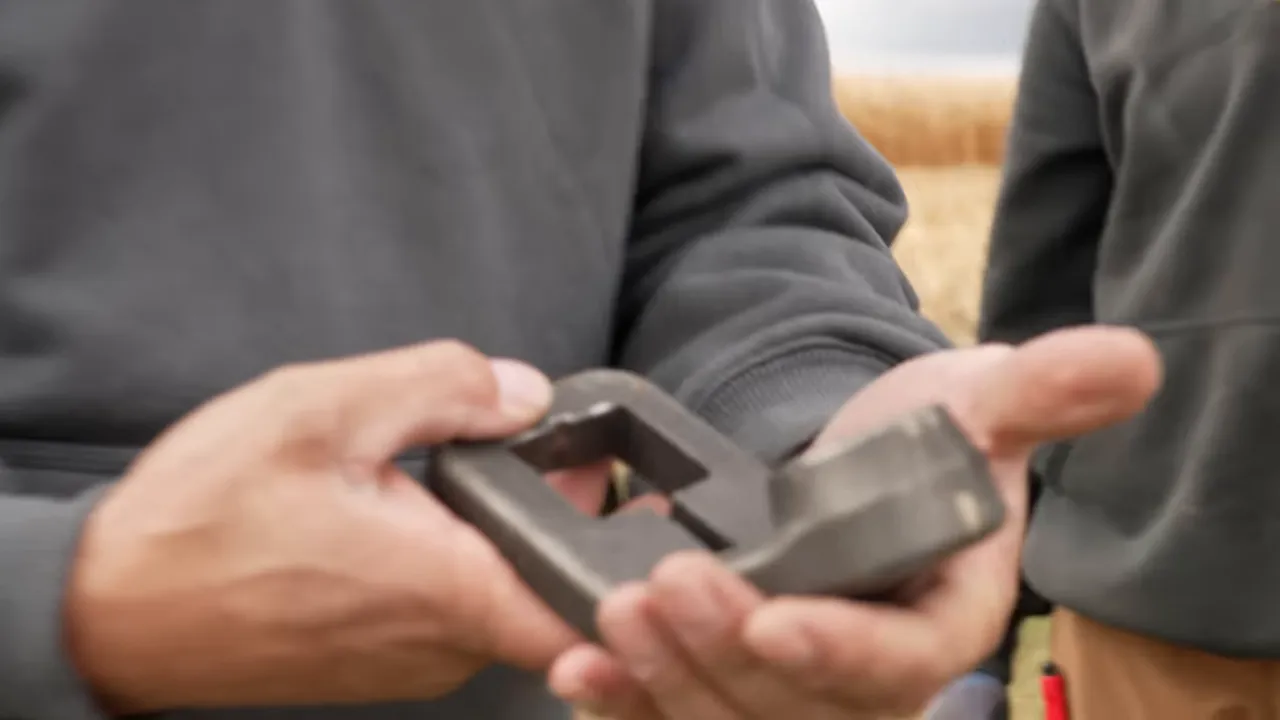
The hammer’s driving point seats in the bracket’s socket. As the hammer strikes the bracket, the bracket takes the post down with it.
That gives you a useful option: you can keep the hammer low rather than lifting it all the way above the post. You reposition the bracket as needed while driving deeper.
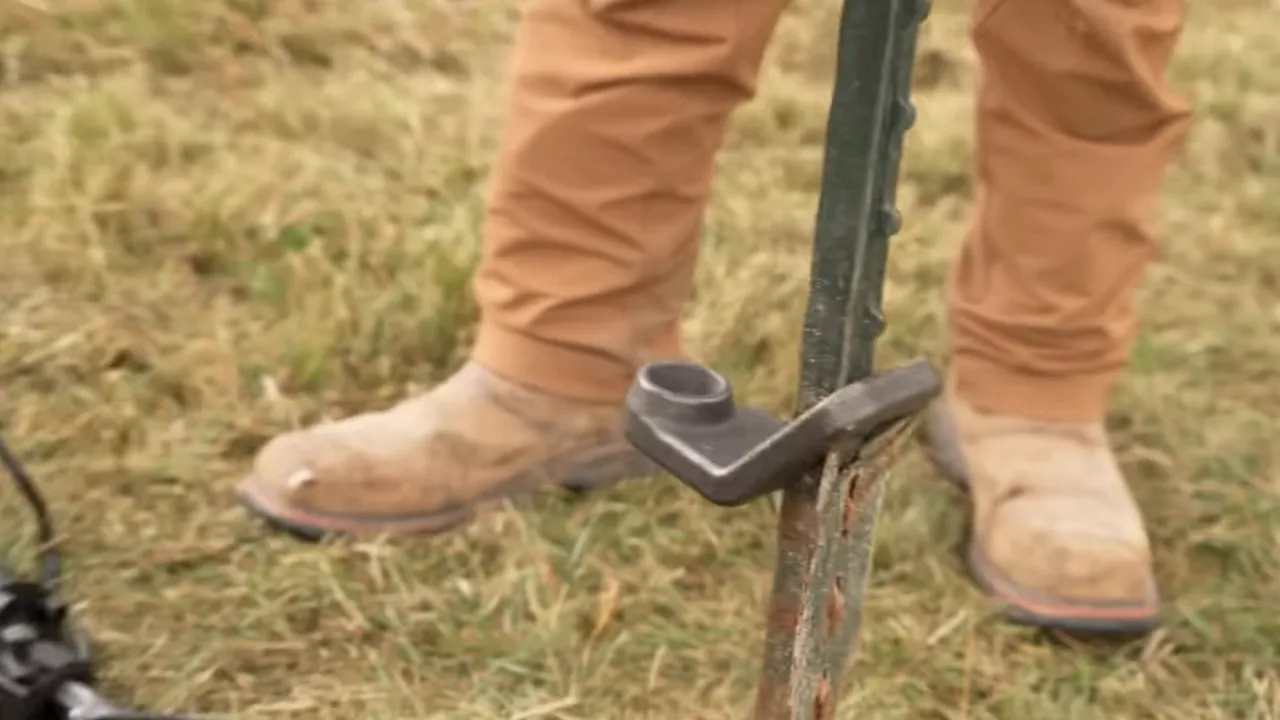
It’s a different approach to the same job, and the low working position immediately caught our attention.
The Test: Drive Three Feet Into Rocky Ground
We needed a meaningful finish line. Around here, plenty of agricultural T-posts get driven until the spade is buried. We also work with specifications that call for deeper installation. For this comparison, we chose a three-foot driving depth and started with the posts and tools on the ground.
That three-foot target was our test condition, not a blanket recommendation for every fence. The point was to make both tools do the same work.
Our ground doesn’t make that easy. About 18 inches to two feet down, we run into river cobble. A tool that does fine in the topsoil still has to prove itself when it reaches that layer.
Before we even started, the first trade-off was obvious: the electric hammer needed to be plugged in. Naturally, the gas-driver side had something to say about that. Of course, we’d just filled the Rhino with gas, so neither machine was operating on good intentions alone.
The Rhino won the race
The Rhino reached three feet first, and it wasn’t particularly close. When it finished, the electric system’s operator reported being only about 12 to 14 inches into the ground.
There was a little adjustment involved with the unfamiliar tool. Out of habit, its operator initially reached as though he needed to lift a driver up and over the post. With this system, he only needed to bring the hammer down alongside it onto the bracket.
Even allowing for that learning curve, the Rhino was clearly faster. By the time the electric system finished, there was plenty of room for jokes about going out for pancakes and coming back.
The cheaper system still got the job done
Speed wasn’t the whole story. The electric driver reached the target depth, including working through the river cobble. It slowed down in the rock, but it kept pounding and kept making progress.
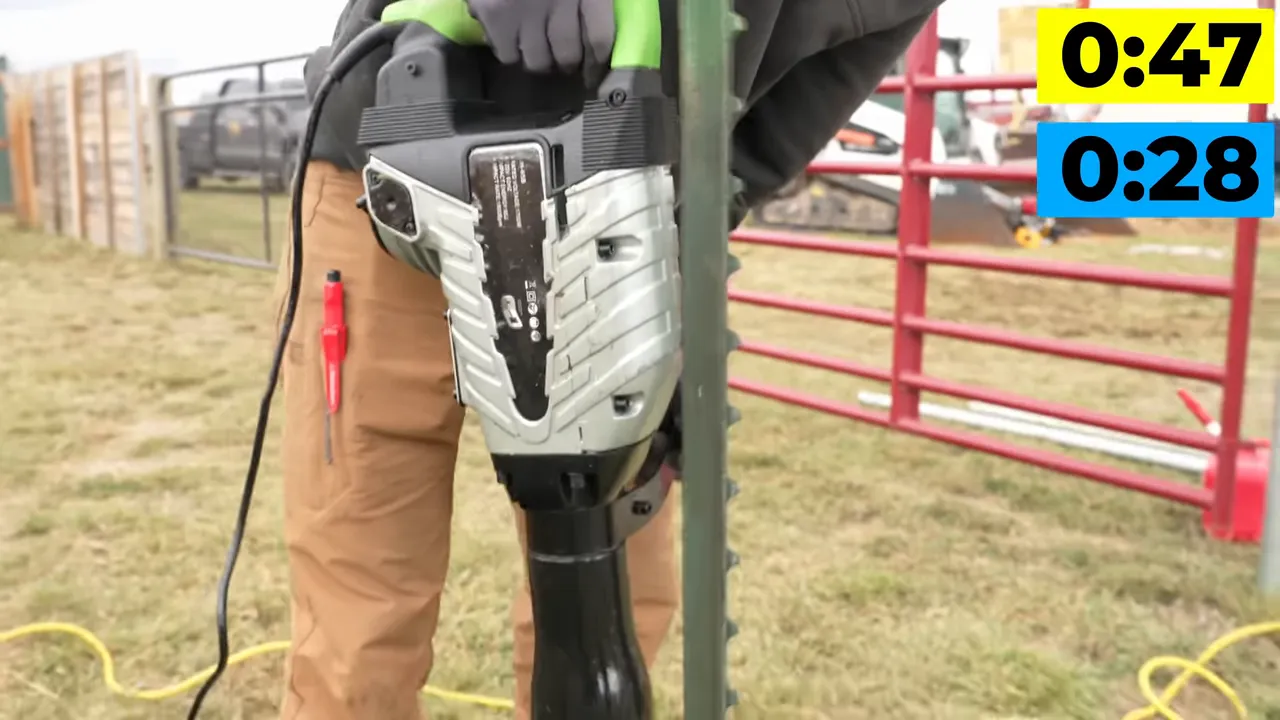
That’s the distinction worth keeping straight: it matched the job, not the pace. This wasn’t a case of a cheap tool stopping where the expensive one kept going. Both got the post down.
Afterward, we ran the electric system again to see whether it could drive deeper. It continued driving. We didn’t establish a measured maximum depth, but it had more to give beyond the original target.
The Biggest Handling Advantage: Keeping the Weight Low
The bracket design’s best feature may be where it lets you hold the hammer.
With an over-the-top driver, you have to get the tool above the post to start. That means lifting and balancing the equipment high. For somebody who struggles with that movement, it’s a real consideration.
The bracket system lets you keep the weight lower and closer to the ground. You still have a substantial hammer to handle, but you don’t have to hoist it above your head to seat it on the post.
We liked that a lot. It’s not just an unusual-looking attachment. It changes how you get the tool into working position.
What Does Each T-Post Driving System Cost?
The price difference is where this comparison gets interesting. The approximate prices discussed during our test were:
- Rhino MultiPro XA as equipped: about $3,600. That includes the driver, channel-post adapter, and extended handles.
- Complete electric T-Post Driver system: about $750. That gets you the hammer and the T-post driving setup.
- Driving shaft and T-post adapter only: about $180. This is the lower-cost route if you already own a compatible hammer.
Those are approximate test-time figures, so check current pricing before ordering. Also, don’t read “provide your own hammer” as “any hammer will work.” Confirm compatibility before buying the shaft and adapter.
Still, that’s a sizable difference in purchase price. The electric setup takes longer per post, but it accomplishes the work for substantially less money up front.
You can check the complete T-Post Driver system, the shaft and adapter, or the Rhino MultiPro XA for current options.
Power Supply and Other Uses Matter, Too
Electric means bringing power with you
The electric system needs an external power source. If you’re already taking a generator for other work, that may not be much of a drawback. If you’re heading out along a fence line without electricity available, it becomes a bigger part of the decision.
The Rhino is gas-powered, so you don’t have to plug it in. You do have to keep it fueled. Neither arrangement is automatically right for every job.
The hammer can do more than drive posts
The complete electric system also comes with a chisel bit. That means the hammer can serve another purpose, such as breaking concrete, instead of being limited to fence-post installation.
The Rhino is a dedicated post driver, but that doesn’t mean it’s limited to T-posts. With the appropriate setup, it can drive other post types that this T-post bracket system won’t handle.
So the utility comparison goes both ways:
- The electric hammer offers different kinds of work, including post driving and concrete breaking.
- The Rhino offers broader post-driving capability, along with the speed advantage we saw in the test.
And When It’s Time to Pull the Posts?
The bracket’s gripping action reminded us of tools that bite onto posts to pull them out. That prompted some joking about reversing the whole operation.
To be clear, we didn’t establish the driving bracket as a post-removal tool. We used a dedicated Postliffter post puller to remove the test posts.
Attempts to pull them by hand didn’t get the job done. So much for the idea that a driven post will just lift right back out.
Our Verdict: A Solid Budget Option, Not a Speed Champion
If you’re on a budget and need to drive T-posts, this electric bracket system is a solid option. We were genuinely surprised by how well it worked in our rocky ground, and the ability to keep the hammer low is a feature we really like.
The Rhino remains the faster tool in this comparison. If speed, gas-powered mobility, and the ability to drive other post types are your priorities, there are good reasons to spend more.
But if your priority is getting T-posts in the ground without buying a $3,600 setup, and you have power available, the cheaper system deserves a serious look. It took longer, but it did the work. That gets two thumbs up from us.


