Building a cedar fence? Before you reach for a stack of 4x4 cedar posts, consider galvanized steel instead.
Yes, steel posts for a wood fence. We love a beautiful cedar fence. We just don’t like putting wood in the ground. An engineered post like the PostMaster Plus gives you steel support without giving up the wood appearance, because a properly finished installation hides the post.
Why Cedar Posts Are the Weak Point
A cedar post is a natural wood product. You can select a good-looking piece, but you can’t completely control how it behaves over time. Once it goes into the ground, moisture and decay become part of the equation.
Setting wood in concrete doesn’t eliminate that problem. Water can work its way between the concrete and the post, keeping the wood wet and accelerating rot.
We generally put cedar post life expectancy at about 10 to 15 years, though actual results vary. On one cedar fence we installed 17 years earlier, four of the original 4x4 posts had finally rotted off. That meant digging them out and replacing them.
That’s the job we want to avoid. A fence can still look good above ground while its wood supports are failing below it.
What Makes a PostMaster Plus Different?
The PostMaster Plus is an engineered galvanized steel post, not a piece of lumber. It removes wood rot from the post itself, and it won’t warp or twist the way a wood post can. That helps keep your fence line straight and true over the years.
It also comes with a limited lifetime warranty. The cedar 4x4 we’re comparing it with does not come with that same warranty. The word “limited” matters, but it’s still an important distinction between the two products.
The practical benefit is simple: avoiding rotten-post replacement can save you the time, labor, and expense of digging up supports later.
You Don’t Have to See the Steel
Here’s the usual objection: “I don’t want an ugly steel post in my cedar fence.” Fair enough. Neither do we.
A properly installed and concealed PostMaster post shouldn’t be visible in the finished fence. You keep the cedar appearance on both sides, while the steel does the supporting work inside.
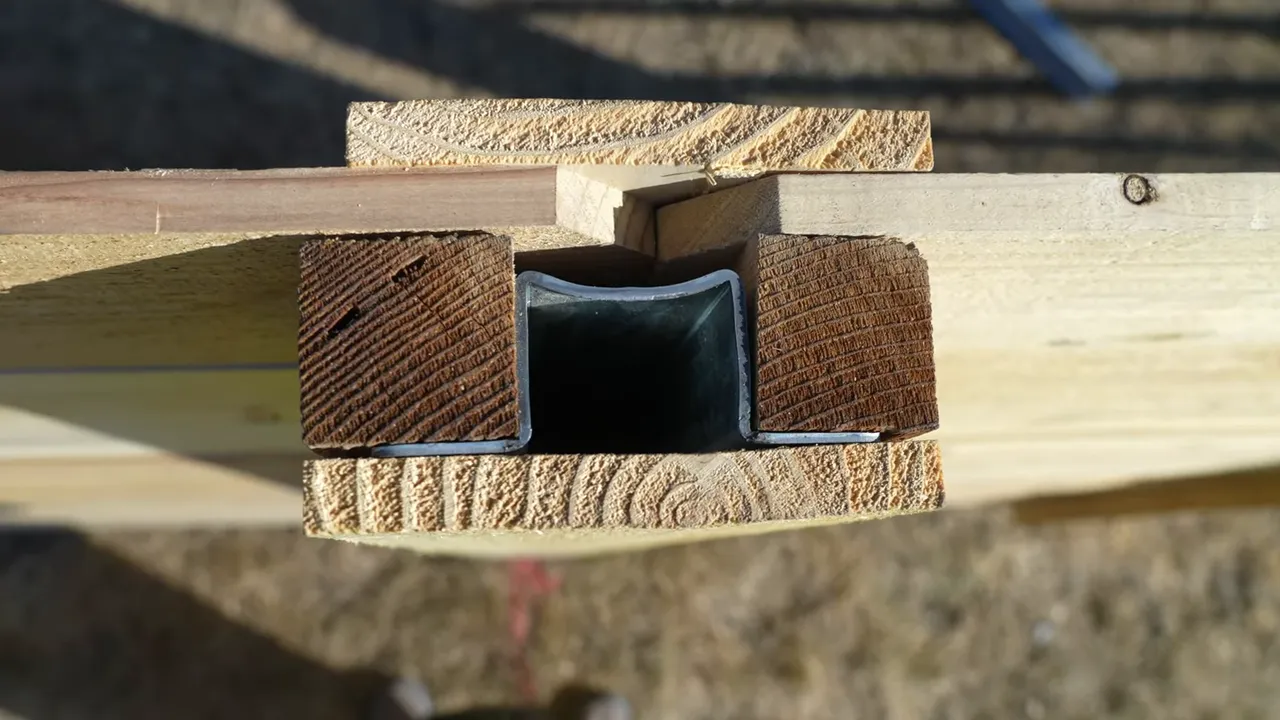
In the horizontal cedar fence shown here, wood surrounds the steel post and covers its exposed faces. There’s only a small glimpse of steel near the bottom. From the finished faces, it reads as a wood fence, not a steel-post fence.
That’s the point: use cedar where you want the look of cedar, and steel where you want a durable support.
Built-In Details Make Installation Easier
The unusual shape isn’t the only thing you’ll notice about these posts. They also have features intended to make fence assembly more straightforward:
- Preformed screw holes: Rows of holes provide attachment locations, with recesses that help the screw heads sit countersunk.
- Six-inch reference marks: Marks along the post give you convenient layout references without measuring every increment from scratch.
- A consistent steel profile: You aren’t working around the warping and twisting that can occur with wood posts.
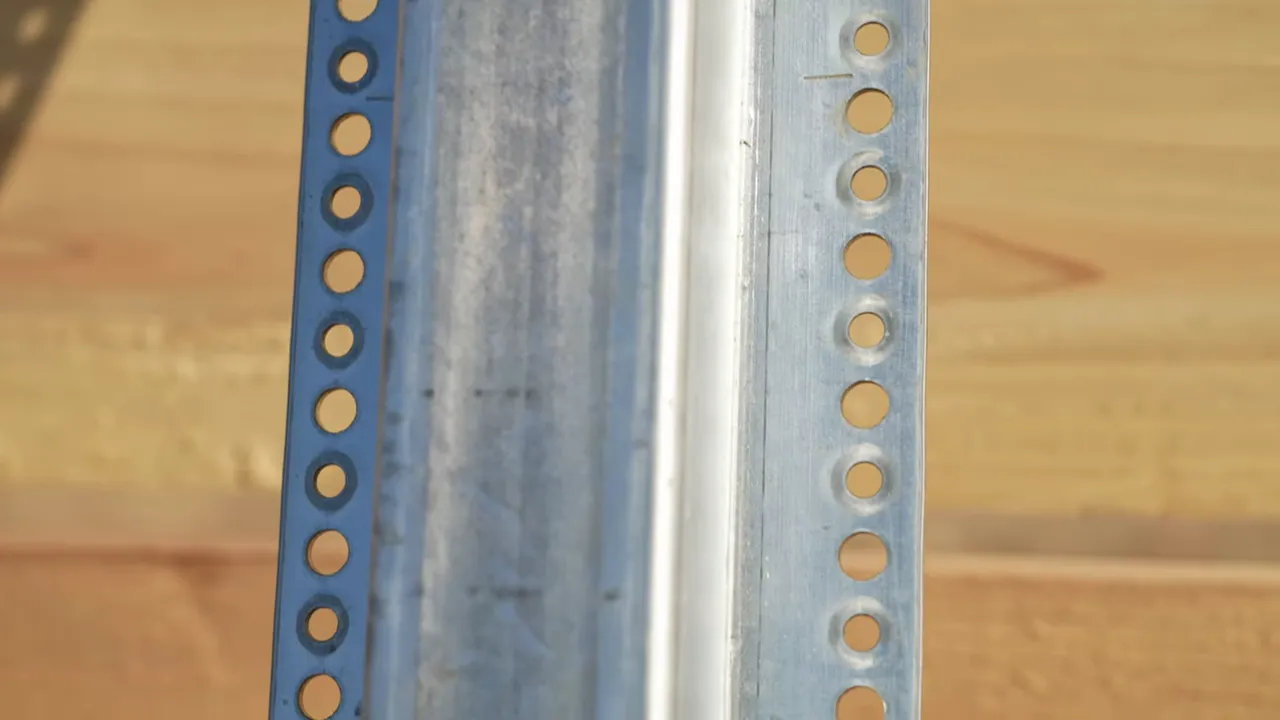
Those details may seem small, but they’re useful when you’re repeating the same layout and fastening work down a fence line.
Not Just for Cedar, and Not Always a Digging Job
These steel posts can also be used for corrugated steel fencing. Cedar is one application, not the only one.
There’s another potential advantage: if your soil conditions are suitable, the posts can sometimes be driven directly into the ground rather than installed in dug holes. That’s an option to evaluate for the site, not a promise that every fence can go in without digging.
Keep the Cedar Look. Rethink the Support.
You don’t have to choose between a beautiful wood fence and steel posts. With the right installation, you can have both.
Our preference is straightforward: keep the cedar appearance, hide the galvanized steel supports, and avoid burying wood that will eventually need to be dug out. The post may look a little crazy before installation, but once it’s concealed, the finished fence is what stands out.


