Terrible ground is one of the biggest things we fight when we build fence. Around here in Wyoming, the rocks scattered across the surface are a pretty good preview of what’s underneath. Start digging, and it’s easy to make a hole wider. Getting it deeper is the hard part.
That’s why we brought over a Bryce Suma tracked fencing machine from Scotland. It drives wood posts, drives pipe, lifts heavy rolls of wire, pulls posts, and even makes a round fence-post hole without an auger.
Yes, you can pound a hole. And after putting this machine through some ugly ground, I can tell you that’s more than a neat trick. It’s a useful way to solve a real fence-building problem. But we also found its limits, broke a wood post, and bent a steel one finding out where to stop.
Disclosure: Bryce Suma sponsored our equipment demonstration. These are the results, advantages, and frustrations we found using the machine.
Key Takeaways
- The 10-inch bomb formed a controlled, 34-inch-deep hole with less surface disturbance than the auger.
- Direct driving seated the 4x4 tightly without excavation, concrete, or packed backfill.
- Pushing past refusal split the wood post and bent the steel pipe.
- Onboard wire handling, post pulling, and a winch extend the machine’s usefulness beyond driving posts.
What’s Under This Tracked Fence-Building Machine?
The base is a Hinowa unit made in northern Italy, powered by a Kubota engine. Hinowa also builds tracked bases for Kubota, and this type of platform commonly carries equipment such as tracked dumpers.
Bryce builds the fencing equipment onto that platform. Our setup also has remote control, which gives us more flexibility in positioning and operating the machine.
The driver has 180 degrees of slew, so we can work off either side or behind the machine instead of constantly repositioning the tracks. A stabilizing mast leg helps steady the setup, and a bullseye bubble level gives us a quick reference for getting the mast vertical.
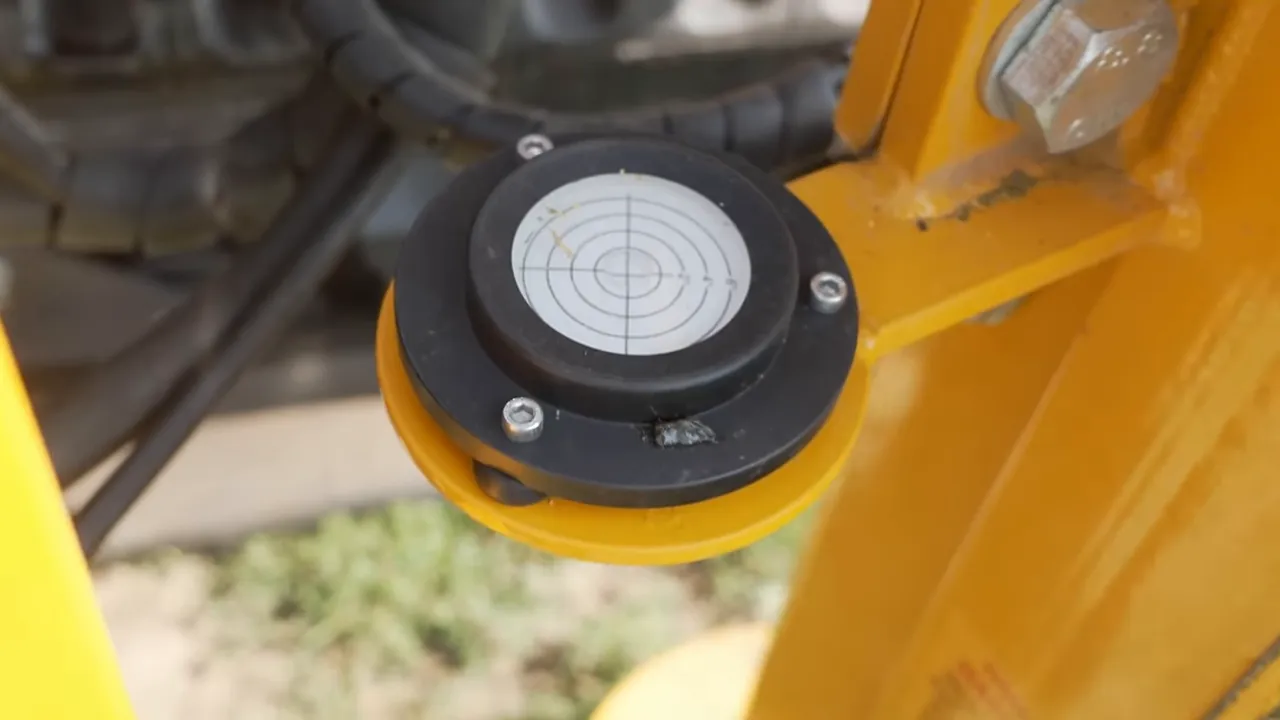
That matters whether we’re driving a post or forming a hole. A straight mast gives us a reference, but the post or tool still needs to stay parallel with it.
A telescopic mast that makes the weight count
This machine uses a 400-kilogram driving weight, roughly 880 pounds. The weight is only part of the story, though. Friction on the way down takes away from the energy available to drive the post.
The automatic telescopic mast is designed to reduce that friction and let the weight deliver a harder hit. It also extends as the weight rises, rather than requiring a separate adjustment of the upper mast every time we want the full available lift.
There’s still an upper travel limit to respect. One thing I like is being able to use the telescopic mast position as a reference rather than constantly looking from the post to the top bump stop.
For moving between locations, the tracked base has two travel speeds. I’d guess the faster setting is around 7 mph, but that’s an estimate, not a measured specification. Think of moving an excavator: not road speed, but plenty useful for getting across a jobsite.
Pounding a 10-Inch Hole Without an Auger
The attachment Bryce calls a bomb is a large steel hole-forming tool. Ours is 10 inches in diameter. Instead of bringing material out on auger flights, we drive the bomb into the ground and then extract it, leaving a hole behind.
For a chain-link fence installation where we need a round post hole, that opens up another option besides drilling.
The basic setup is straightforward:
- Position the driver over the hole location using the machine and mast slew.
- Set the stabilizing leg and check the mast for plumb.
- Keep the bomb aligned with the mast as it is driven.
- Extract the tool and check the finished hole for depth and loose material.
Our ground makes a good test because an auger tends to pull rocks from the sides as it works. Every rock that comes loose can enlarge the hole. Before long, you’ve got a big opening at the surface and you’re still fighting for depth.
The bomb left a much more controlled opening. We measured about 34 inches deep, without the big, blown-out cone at the top.
A small amount of water could have saved cleanup
The dry surface material did slough into the hole. I tried cleaning it with a shovel, and honestly, I would have been better off leaving the shovel out of it. Disturbing that dry edge knocked more material loose.
In dirt like this, my recommendation would be to dampen the surface around the opening so it holds together better. That won’t do the same thing in ground that’s entirely rock, but where there’s soil binding everything together, a little water can help.
Our rule still applies: if it’s loose, it comes out. The advantage is reducing how much loose material you create in the first place.
That’s especially appealing on a lawn or any job where keeping the area clean matters. Less excavated material means less dirt to collect, haul, and dispose of.
The Fair Comparison: A 9-Inch Rock Auger
To give drilling a fair shot, we used a 9-inch rock auger. It has specialized cutting teeth at the bottom and relatively wide spacing between its flights.
A rock auger isn’t necessarily the perfect tool for loose cobble mixed with dirt. I chose this one because the wider flight spacing gives rocks a better chance of coming up out of the hole.
The drilled hole actually turned out better than I expected. After drilling and hand cleanup, it was also about 34 inches deep. The difference wasn’t simply whether we could reach depth. It was the shape of the hole and the mess required to get there.
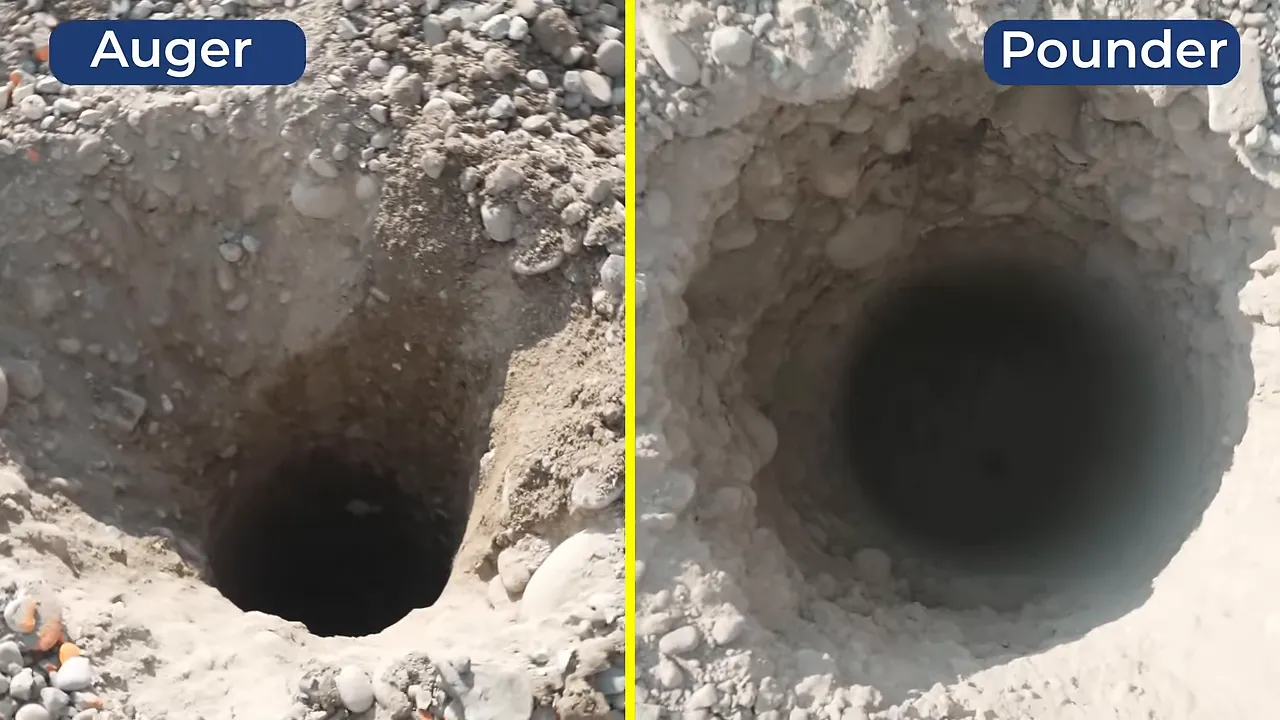
The auger left a larger, irregular opening at the top and a pile of material to handle. The pounded hole stayed much closer to the shape of the tool.
Flight design makes a difference here. A double-flighted auger has another flight between the widely spaced flights on the one we used. In this cobbly ground, that gives larger rocks less room to travel upward and can make the problem worse.
A larger-diameter, double-flighted auger can disturb even more material. Hit a rock, slide off location, try to get centered again, and the opening grows in a hurry.
This was about as favorable a result as I expected from our auger in this particular ground. It still showed why pounding a hole is worth considering.
Driving Wood Posts: Two Very Different Results
A machine that can make a hole is handy. A machine that can also install the post directly gives us more options. We tried both a large round wood post and a smaller 4x4.
The 12-foot round post met its limit
Our large wood post was 12 feet long and about 6 inches in diameter. Because we knew there was substantial rock underneath, we first drove a 4-inch rock spike to prepare a pilot hole.
This setup carries three rock spikes:
- A 4-inch spike.
- A 3-inch spike.
- A 2-inch spike.
It also has an auger option with 3-inch and 6-inch augers. The attachments have storage positions on the machine, which is a nice practical detail. We don’t need to find room for them in another truck.
Our standard mast gives us about 13 feet underneath the drive cap, leaving roughly a foot of initial fall above a 12-foot post. Bryce also offers a high-mast option for 14-foot posts.
The wood itself was working against us. This post was old and dry, which is about the worst scenario for driving. Wetter wood generally drives better and is less prone to splintering.
We got the rock spike just over 3 feet down. The site had roughly 2 feet of clay over cobble, so we were already into the difficult layer. As the post reached that resistance, the top started splitting.
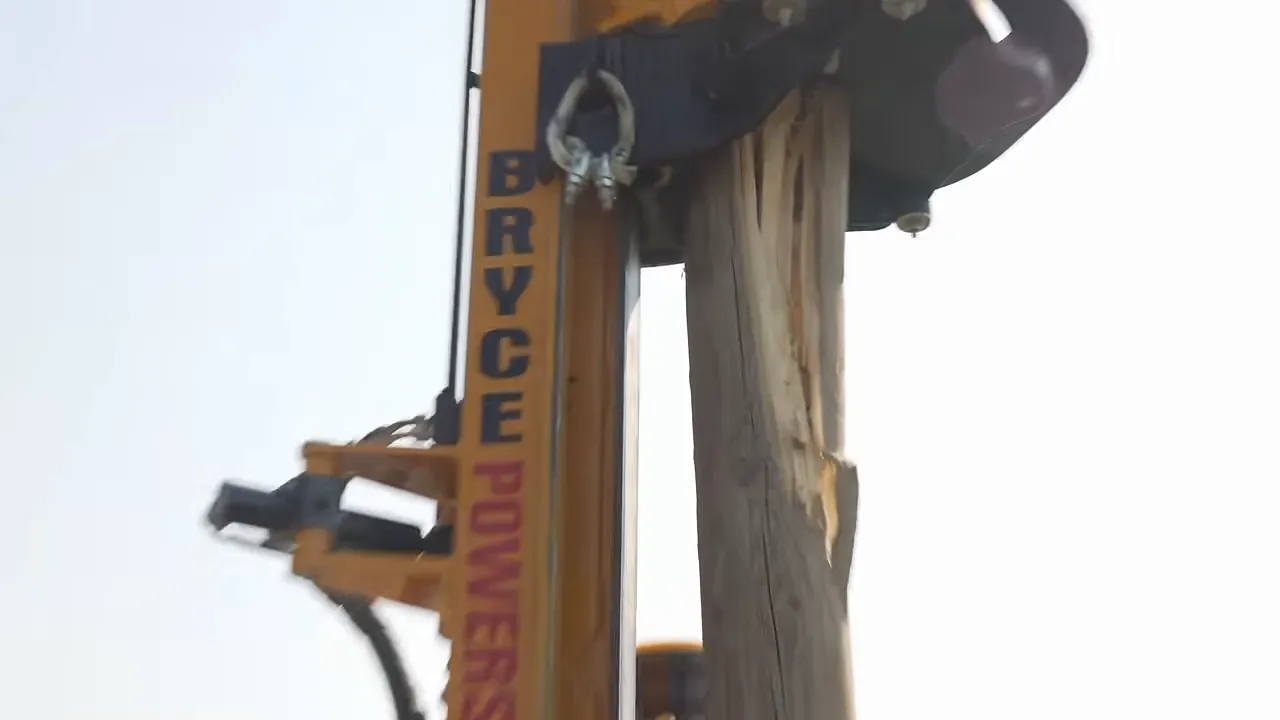
I kept going briefly to see whether we could reach our 4-foot target, knowing we were likely to destroy the post. We did exactly that. The driver had been working nicely, but the wood couldn’t take the punishment.
The built-in post lifter earned its place
After breaking the post, we used the machine’s post lifter to remove it. Bryce supplies a dedicated pulling chain with the unit, identified as Grade 8, for that job.
Having a post-removal tool built into a post driver makes good sense. Sometimes you’re replacing old fence. Sometimes you’re pulling out the post you just sacrificed in an equipment test.
The 4x4 went in without a pilot hole
Next, we tried a 4x4 wood post without rock-spiking first. This one drove in cleanly and finished plumb, with about 68 inches above the ground. That’s the post height we were looking for in our 6-foot privacy-fence example.
The embedment was about 32 inches. It was a tight post, and we hadn’t dug a hole, packed backfill, or created a dirt pile.
I tried pulling it out by hand, the same sort of test I’d used on posts set in gravel and native backfill. It wasn’t coming out.
That’s the benefit we’re after with direct driving: a solid post seated without excavating the surrounding soil and then trying to pack it back into place. Based on how it drove, I’d expect rock-spiking first to make a 3-foot set achievable here, but we did not demonstrate that depth with this 4x4.
More Than a Post Driver: Wire Handling and a Winch
A fencing machine needs to help with more than hammering posts. Heavy wire rolls can eat up a lot of effort, too.
We tested the side-mounted wire unspooler with an 8-foot roll of game fence. I estimated that roll at around 500 pounds, so it was not something I wanted to manhandle.
The machine lifted it from horizontal to upright. Some other machines we’ve used have struggled with that task because of the leverage created by such a long roll.
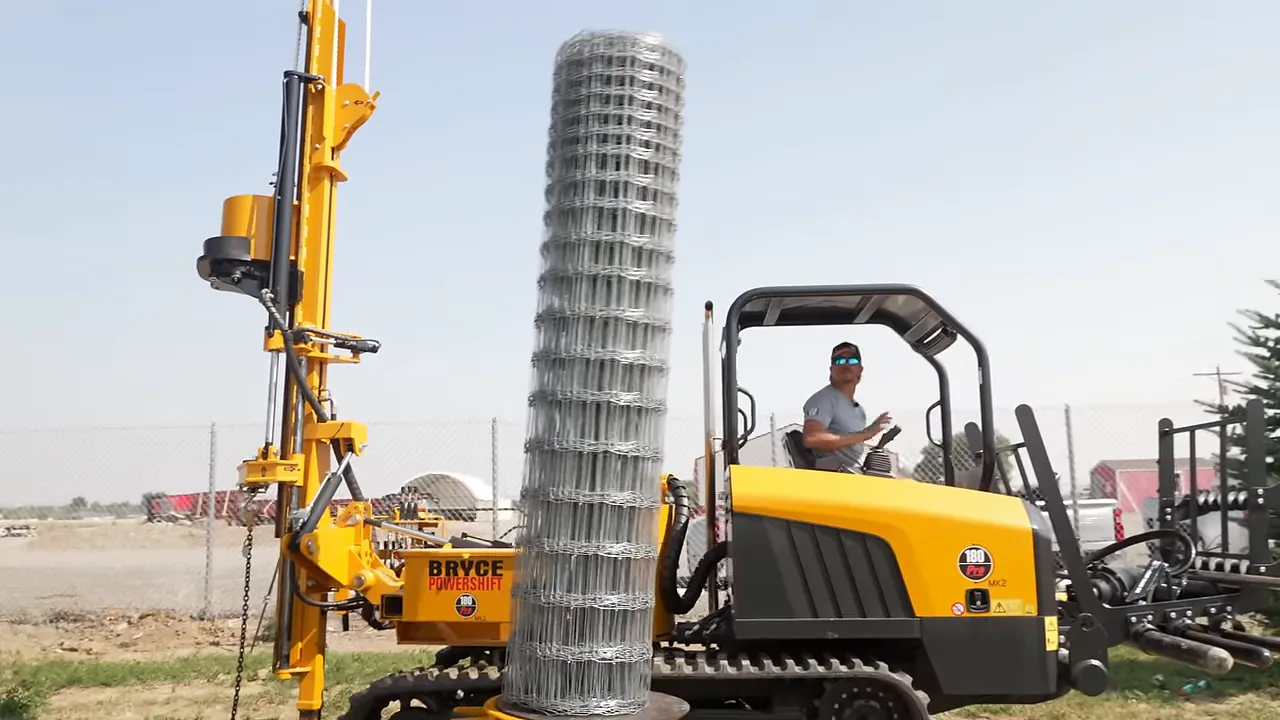
We had the roll upside down for this lift demonstration, not oriented for installation. The point was to test whether the machine could pick it up, and it did.
Other useful features on this setup include:
- A wire-spooling bar: It can be positioned for paying out wire from either side.
- A remote-operated electric winch: The 9,500-pound winch can operate with the machine’s engine off and provides an option for stretching or recovery tasks.
- A carrying basket: It gives us onboard room for posts and other supplies.
There is a layout tradeoff. The winch prevents the spooling bar from sliding all the way through. Splitting the bar into two pieces could provide a separate bar on each side, but that was an idea we discussed, not a modification we tested.
Driving Steel Pipe Without Mushrooming the Top
For the pipe test, we used a 12-foot-long, 4-inch steel post. Our initial goal was 4 feet of embedment, followed by a test of how much farther the machine could drive through the cobble.
Bryce’s patented adapter cap accepts different-sized cups to fit the pipe. Its job is to reduce the mushrooming and belling that can happen when a drive cap repeatedly strikes the top of a steel post.
That damage matters. Bell the top outward, and installing the final fence-post cap becomes a fight.
The adapter protected the pipe, but needed readjustment
With the fitted adapter, we reached about 4½ feet deep. The pipe top stayed round and flat, noticeably better than another post we had driven with a different cap.
The frustration came when the pipe hit the hard layer and started bouncing. It wanted to jump out of the tightly fitted cup. We had to keep readjusting the adapter to get it seated again.
I also had a safety concern during the adapter change. I wanted a positive mechanical stop to secure the raised assembly before working underneath it. That part of the setup made me nervous, and it’s an area where I’d like to see a clear mechanical safeguard.
Removing the adapter got more depth, but damaged the post
We removed the fitted adapter and tried driving farther. We gained roughly another 4 inches, with the final measurement landing around 5 feet.
But we bent the pipe doing it.
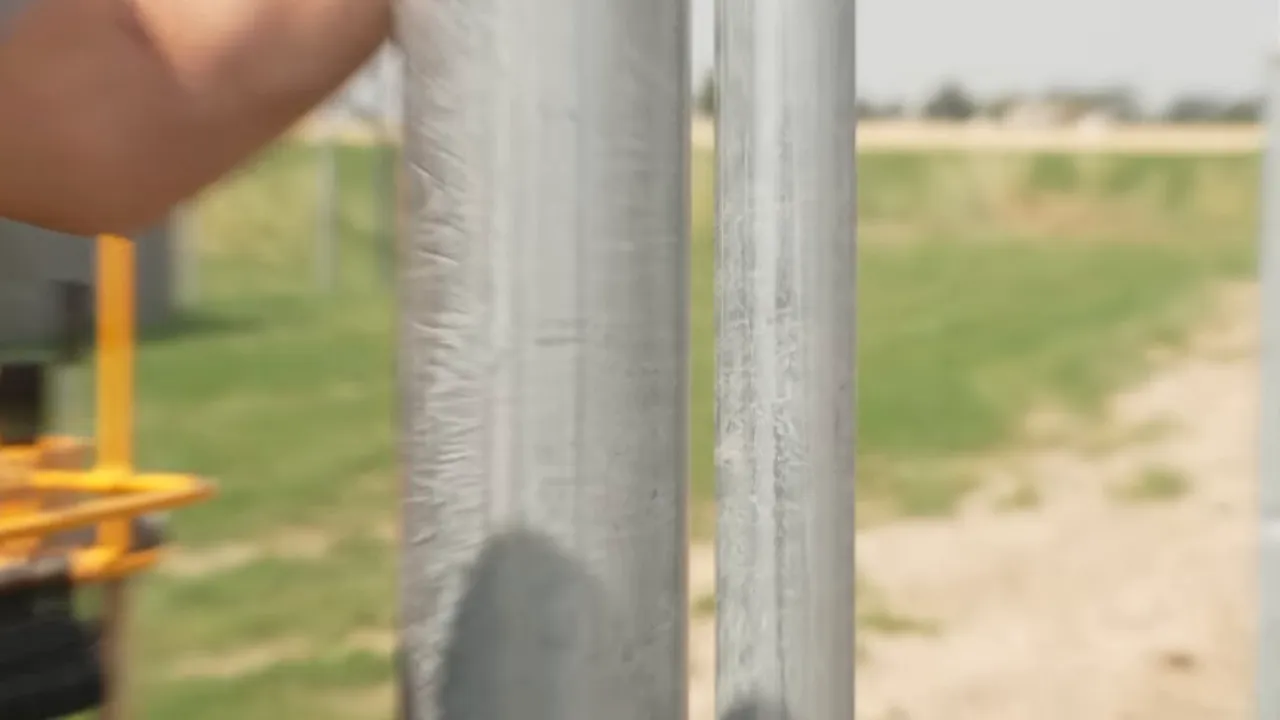
That extra depth was not a success. We don’t build fence with a bent post just so we can brag about how far it went into the ground.
Once you hit refusal, stop. If the post isn’t meaningfully advancing and the impacts are turning into bouncing and damage, more hammering isn’t improving the installation. Wood can split. Steel can bend. We proved both.
How Well Did That Driven Pipe Hold?
Well enough that we couldn’t pull it back out with the Bryce. Then we tried the Toolcat, and that couldn’t remove it either.
Rather than risk damaging equipment, we stopped. We’d need to return with something bigger, such as one of our larger skid steers or possibly a 6,000-pound forklift.
So, to the folks who insist driven posts never hold: I submit this particular post.
That’s not a universal claim about every soil condition or every fence design. It is a pretty convincing field result in this ground. The post was firmly seated, even though we had ruined its straightness by pushing past refusal.
Transport, Balance, and the Reality of a 12,500-Pound Machine
Fully equipped with the bomb and the attachments shown, this machine weighs about 12,500 pounds. This is not a lightweight attachment you casually add to whatever trailer happens to be available.
In its folded transport position, our setup measures:
- Less than 8 feet tall.
- Less than 6 feet wide.
- A little less than 17 feet long.
You need a trailer and towing setup suited to that load.
Some of the weight comes from counterweights opposite the driver. That’s important because a tall mast with an approximately 880-pound weight raised on one side creates a balance challenge.
The counterweights make the machine heavier, but they also make it better balanced. That gives me more confidence on side slopes than a machine heavily loaded to one side, though it does not eliminate tipping risk.
The tracks are approximately 16 inches wide, providing useful flotation. Available equipment such as extra lighting adds to the machine’s versatility, but the combination of tracks, counterbalance, positioning range, and onboard tools is what stands out most to me.
Is the Bryce Suma the Perfect Fence Post Driver?
No. There isn’t a perfect driver.
We keep hand drivers, gas-powered drivers, hydraulic drivers, and skid-steer-mounted drivers because different applications call for different equipment. One machine does not magically replace the right tool for every job.
But if I had to pick one machine to cover the widest range of fence-building work, this Bryce would be a strong contender. It gives us accurate positioning, several ways to deal with rocky ground, direct post driving without concrete, post removal, wire handling, and a winch in one tracked package.
The biggest lesson isn’t simply that it hits hard. It’s that we have choices. We can pound a clean hole, prepare a smaller pilot hole, drive a post directly, or switch to an auger. And when the ground finally wins, we need to recognize refusal before we destroy the post.
For U.S. inquiries about the Bryce Suma fencing machine, contact us at (307) 578-8040 or sales@swifence.com. Bryce also offers international shipping.
It took a trip to Scotland to find this setup, but it brought home some genuinely useful options for building fence in difficult Wyoming ground. Have a good dang day.


