Fencing pliers have that funny-looking head for a reason. They’re not just for you and your buddy to have a pretend sword fight at work. The point, jaws, teeth, and cutting notches all have actual jobs.
With one tool, you can start staples, pull them out, hold sharp wire, twist it, take up slack for a small repair, and cut it. That’s what makes fencing pliers more useful for wire fence work than a standard pair of pliers. Here’s how those features earn their keep.
Pull Stubborn Fence Staples With the Point and Jaws
That sharp, curved point on the head is there to get underneath a fence staple. When a staple is buried tight against a wood post, you may not have enough room to grab it with the jaws right away.
The trick is to make room first, then switch your grip.
- Work the point underneath the staple. Position it beneath the staple’s crown, where you need a little clearance.
- If necessary, tap the back of the pliers with a hammer. This helps the point get underneath a staple that is driven tightly into the wood.
- Hook and pry the staple up slightly. You only need to raise it enough for the jaws to get a bite.
- Grab the exposed staple with the jaws. Once you have a firm grip, lever and pull it out of the post.
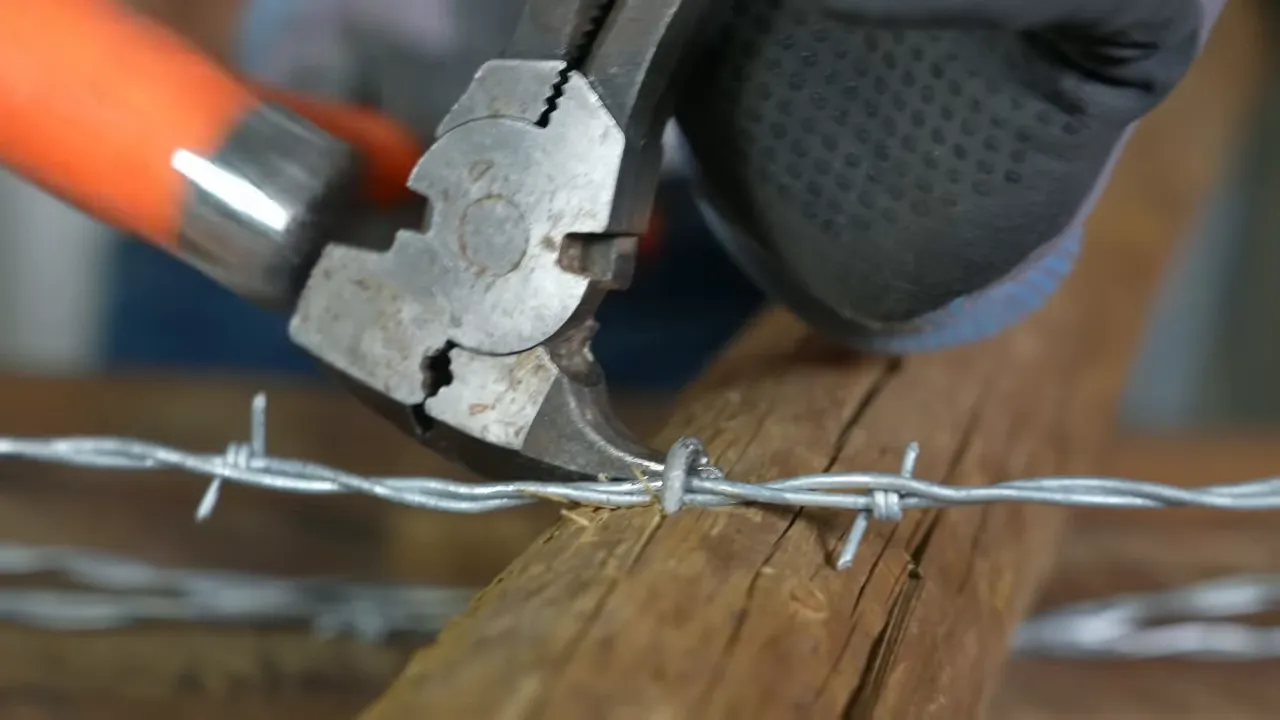
Prying and pulling are two separate moves. If you can’t quite grab the staple, don’t keep fighting for the same impossible grip. Get underneath it, lift it a little, and then reposition the pliers.
And yes, wrestling a staple out of a loose piece of wood can be awkward. A post that stays put makes the job a whole lot easier.
Hold Wire While You Terminate It at a Post
Barbed wire is sharp, pokey, and generally not something you want to hold in your bare hand while you work. Fencing pliers give you a way to grip the wire while you finish the connection.
Use the gripping area near the head, the same area used to grab a raised staple, to hold the strand. With the pliers maintaining your grip, you can work the loose end around the wire to complete the termination at the post.
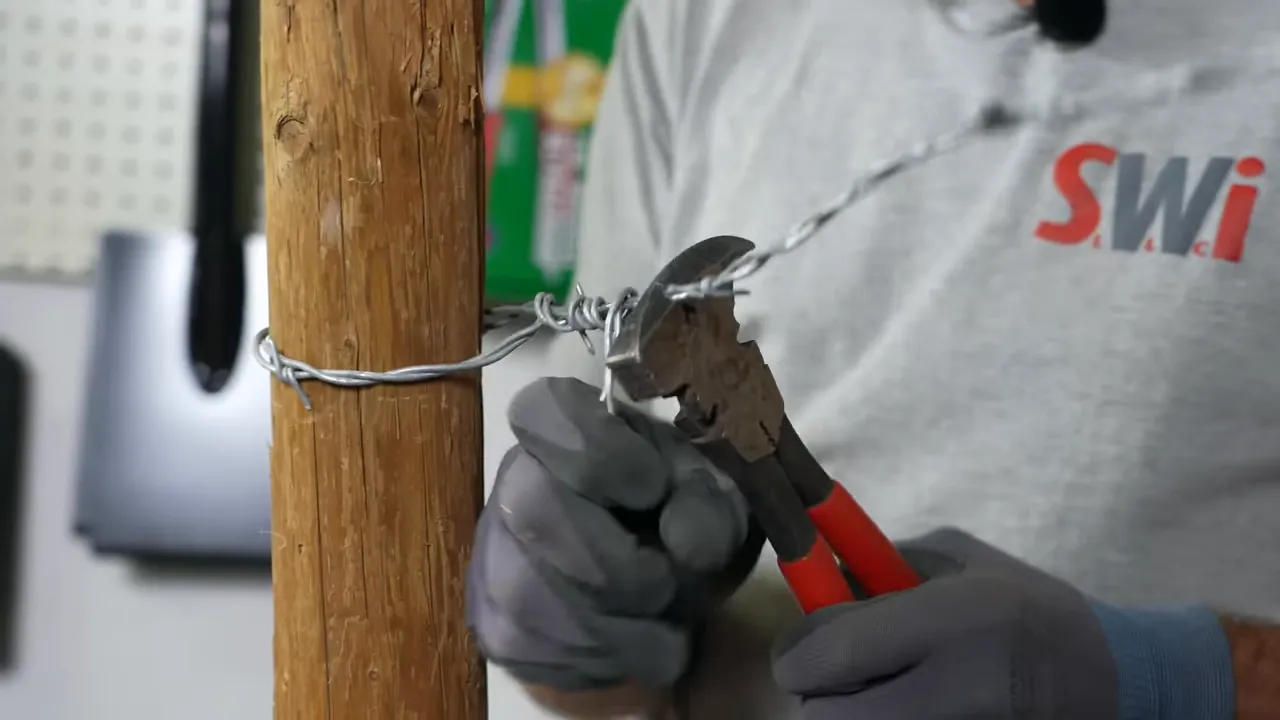
This works with barbed wire or smooth wire, also called barbless wire. The useful part is having the tool hold the strand instead of relying on your hand to grip it directly while you wrap and twist.
Take Up Slack for a Small Fence Repair
The little teeth in the gripping area have a purpose, too. They bite onto the wire so you can hold it while applying leverage.
For a simple, small repair:
- Grip the wire with the toothed section of the pliers.
- Use the post as a pivot point and rotate the pliers while pulling the other end of the wire tight.
- With the slack taken up, staple the wire off or wrap and terminate it at the post.
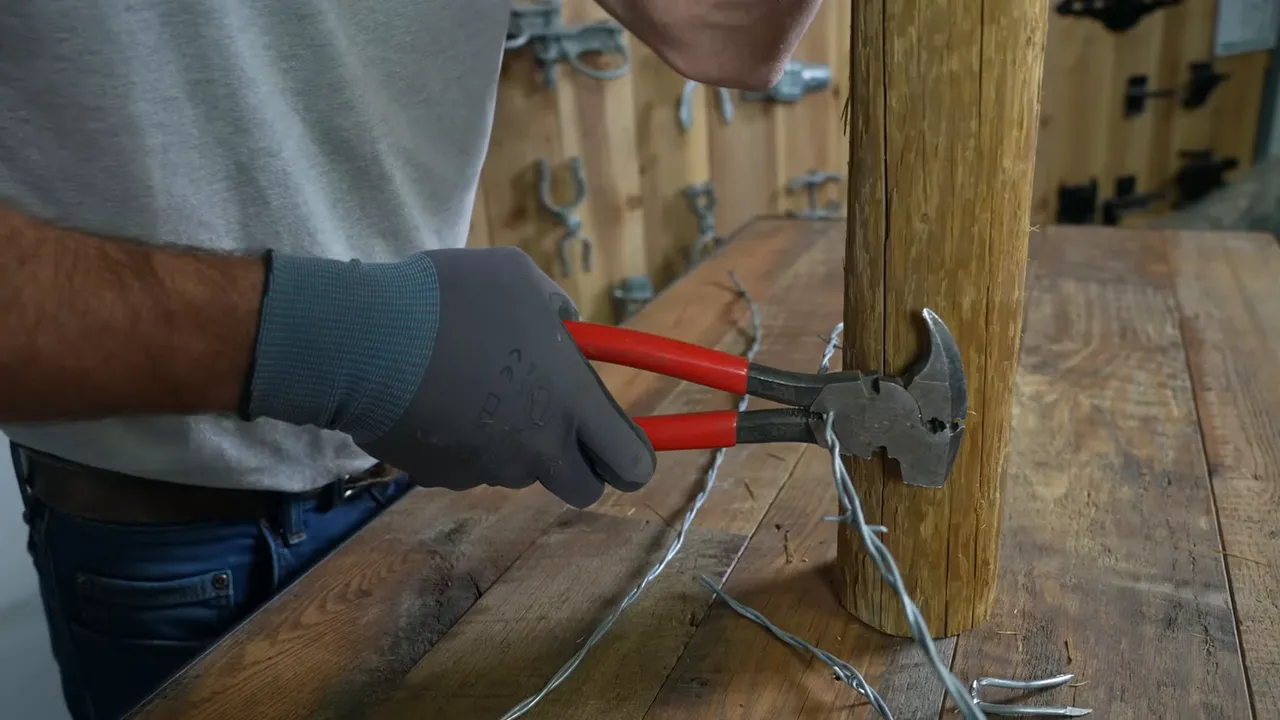
The scope matters here: this is a handy technique for a small repair. It’s a way to use the grip and leverage already built into the tool, rather than treating the pliers as nothing more than something to pinch with.
Cut Wire With the Notches Near the Pivot
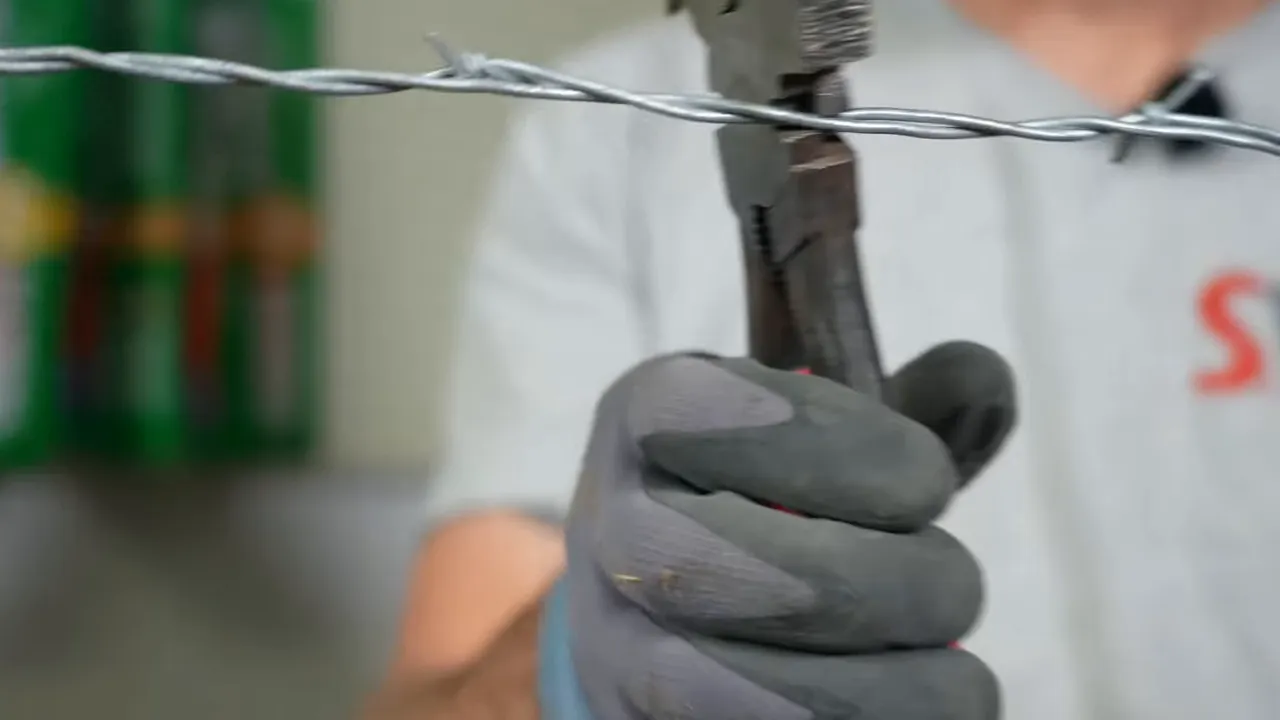
Open the handles and look near the pivot. You’ll see two cutting gaps that close as you squeeze the handles together.
Put the wire into one of those gaps, then close the handles to cut it. The wire goes in the cutting notch, not simply between the gripping faces of the jaws.
Start Staples With the Hammer Face
The broad striking face on the head lets you pound fence staples into wood. Along with the staple-pulling point on the other side, it gives you a tool that can handle both installing and removing staples.
That’s part of the appeal in the field: the same pair of pliers can help put a staple in, pull one back out, and handle the wire in between.
Why Choose Fencing Pliers Over Regular Pliers?
A conventional pair of pliers, such as our Klein Nines, is still useful. You can grip, cut, and twist wire, including twisting T-post clips. We’re not throwing those out.
But cutting and twisting aren’t the whole fence job. Purpose-built fencing pliers combine:
- A hammer face for driving staples.
- A pointed hook and jaws for loosening and pulling staples.
- Gripping surfaces for holding wire during termination.
- Teeth for gripping wire while taking up slack on small repairs.
- Cutting notches for cutting fence wire.
The big difference shows up when you reach a stubborn staple in a barbed wire or smooth wire fence. Standard pliers may cut and twist just fine, but they don’t give you that dedicated point-and-jaw setup for getting the staple out.
That’s why fencing pliers deserve a spot in the tool kit. Learn what each part does, and that odd-looking head starts making a whole lot of sense. Put it to work, leave the sword fighting out of it, and have a good dang day.


