A gas post driver for $281 sounds pretty dang appealing when a professional setup costs around $3,400. Especially if you are building one fence, trying a no-dig system, and cannot justify buying contractor equipment for a single project.
That is exactly why we bought this Vevor. We wanted it to work. An affordable driver that could get a homeowner through a fence installation would solve a real problem.
So we put a brand-new Vevor up against our well-used Rhino MultiPro in frozen Wyoming ground. We started with T-posts, tried a pointed rebar stake, moved to more forgiving soil, and finished with 2 3/8-inch round posts. Then we opened both machines to see what was going on inside.
The short answer: the Vevor can get some work done, but it is not a bargain-priced replacement for a professional post driver. Ground conditions make an enormous difference, and similar-looking engines do not mean similar driving power.
Key Takeaways
- The Vevor drove T-posts in more forgiving ground but struggled badly in the initial frozen test area.
- The Rhino drove faster, required less effort, and reached substantially deeper with larger round posts.
- Similar engine sizes did not produce similar impact power because the drivers use different hammer mechanisms.
- The Vevor may suit occasional light-duty projects, while durability and parts support remain uncertain.
What Do You Get for $281?
The price difference is hard to get past. The Vevor cost us less than 10 percent of the professional Rhino setup we were comparing it with. That puts it in a completely different buying category.
Here is what stood out during the initial inspection:
- Weight: About 45 pounds, according to the Vevor specifications.
- Engine: A four-stroke engine that looks very similar to the Honda GX35 on our Rhino, with roughly comparable displacement.
- Adapters: Two threaded collars for accommodating different post sizes.
- Opening: We measured approximately 2 1/2 inches at the larger opening.
- Handles: Short handles, without the extended reach available on our Rhino setup.
- Housing: Castings that did not appear as well finished or substantial as the professional machine.
The engine resemblance was striking. The cowling, fuel-hose routing, choke location, and general arrangement all looked familiar. But I could not verify the Vevor engine's manufacturer, and I would not call it a genuine Honda just because it looks like one.
That distinction matters. More importantly, the engine is only one part of a post driver. The mechanism underneath has to turn that rotation into useful impacts.
Post capacity is not the same as driving ability
The larger collar opening was encouraging because it gave us room to try common round fence posts. But fitting a post into the machine does not tell you whether the machine can drive it to the depth you need.
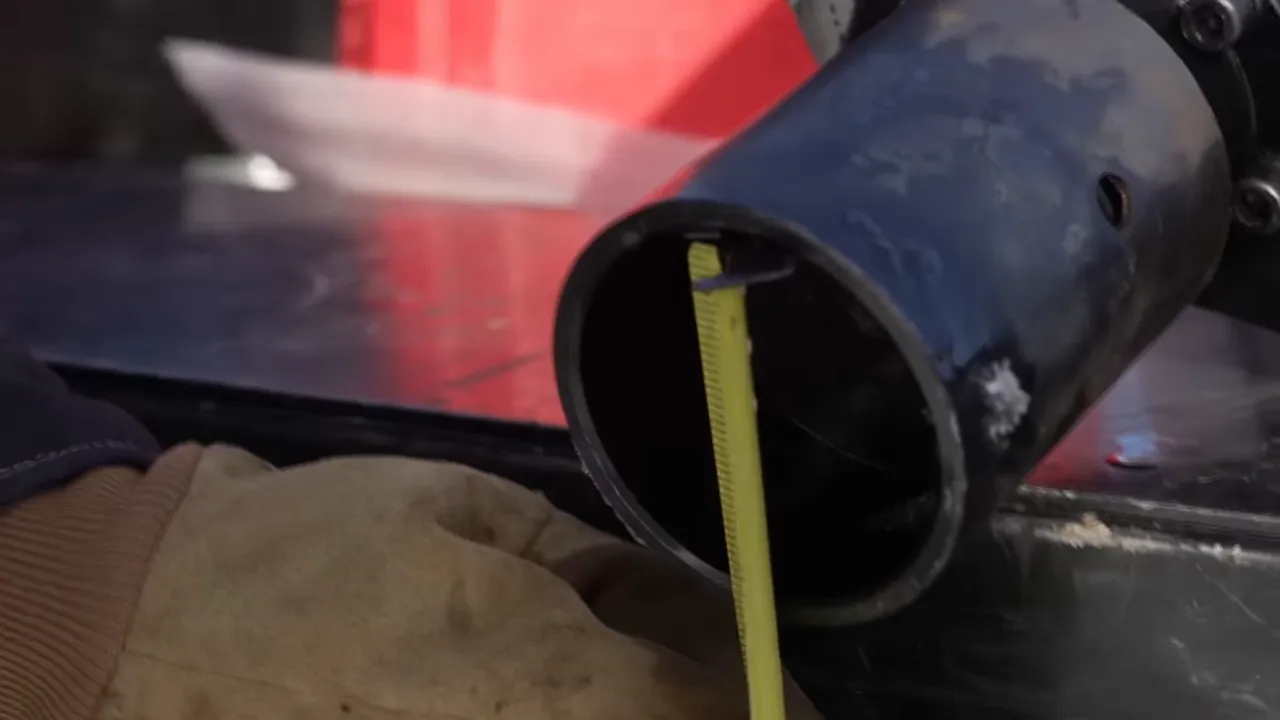
The threaded collars also got us thinking about adapters for channel posts, including the kind used as wood-post replacements in our Trident system. A custom threaded adapter might be possible. That was an idea, though, not a finished accessory or a tested application.
The lack of extended handles was another practical difference. On tall posts, reaching the Vevor's controls and keeping the machine positioned becomes more awkward. Later, we shortened a T-post simply to remove that reach problem from the test.
Before Starting: Check the Oil and Learn the Controls
Our first near-mistake happened before the driver touched a post. Initially, I thought there was oil in the engine. A second look showed otherwise.
There goes $281 in a hurry if you get that wrong.
Do not assume a new four-stroke post driver arrives ready to run. Check the engine oil before starting it, and get the level right. Overfilling is not the answer either.
Starting involved the familiar basics: priming the fuel system, setting the choke, making sure the stop switch was in the run position, and pulling the starter. The Vevor also needed a little throttle before it would cooperate.
We managed to give each other plenty of grief about starting these machines, then got tripped up by the Rhino's switch labeling ourselves. The useful lesson is simple: know the actual run and stop positions on the machine in your hands. Do not assume every driver's controls work or read the same way.
Full throttle was not automatically better
Once we started driving, I noticed something odd with the Vevor: squeezing the trigger all the way did not seem to work as well as holding it partway.
It had an adjustable throttle stop, which appeared useful for holding that partial-throttle position. We experimented with it rather than assuming maximum trigger travel meant maximum useful impact.
That adjustment did not suddenly turn it into a Rhino. But it was worth checking before blaming every bit of poor performance on the hammer mechanism.
First Test: A T-Post in Frozen Ground
The Vevor was advertised as a T-post driver, so that seemed like a fair place to start. We installed the smaller collar and tried to drive a T-post down to its spade.
It did not go well.
The machine ran, but the post made very little progress. Yes, the ground was frozen. Those are tough conditions. Still, I expected a gas driver sold for T-posts to deliver a more convincing hit than this.
What bothered me most was the feel. It simply did not feel as though much impact energy was reaching the post. After spending time on it, we were already looking for an easier assignment.
Would a pointed rebar stake be easier?
We switched to a pointed rebar stake. Smaller cross-section, pointed end, seemingly less to ask of the machine.
The result was still frustrating. The Vevor struggled enough that I wanted to check our expectations against a machine we knew. Maybe the frozen ground was worse than it looked. Maybe there was something about the setup we were missing.
Rather than immediately write the Vevor off, we brought in the Rhino to try the T-post.
The Rhino established the difference
The Rhino moved the post much more convincingly. That told us the ground was difficult, but it was not simply undriveable.
We even put the Vevor back on the post after the Rhino had advanced it, to see whether getting past the initial resistance would help. Between that and the throttle adjustments, we gave the budget machine more than one chance to find its footing.
The gap remained obvious. We needed to find out whether the Vevor was incapable of useful work or just badly outmatched by that particular patch of ground.
Moving to Looser Ground Finally Got Results
Our next stop was a recently plowed field. It was still winter, and the ground was still frozen, but the soil should have been looser than where we started.
We also cut a T-post shorter. That was not intended to make the post easier to penetrate the soil. It was simply to make the tool manageable without having to work from above a tall post.
And there it was: the Vevor drove a T-post.
After all the struggling, that felt like an accomplishment. We wondered aloud whether the engine was loosening up with use, but we did not establish a break-in effect. We had changed locations, so the more forgiving soil was an important part of the result.
That distinction is central to this review. A driver can work in one part of a property and struggle badly a short distance away. The fact that it eventually drove a post did not erase the earlier failures. It showed that the Vevor had a usable range, and that range depended heavily on conditions.
Vevor vs. Rhino: The Side-by-Side T-Post Test
With the Vevor now doing useful work, we lined up both machines for a direct comparison. The goal was to drive the T-posts down far enough to bury their spades.
This was not a new professional driver against a worn-out budget tool. It was the opposite: a brand-new Vevor against a Rhino that had already seen plenty of work.
Both finished. The experience of getting there was very different.
- The Rhino: Advanced the post much faster and required less wrestling from the operator.
- The Vevor: Completed the drive, but took several times as long and demanded noticeably more effort.
My immediate impression was that the Vevor took roughly three times as long. More important than the exact ratio was how much harder I had to work to keep it driving.
The shallow cup made handling harder
The Vevor's receiving cup did not feel deep enough to keep the tool comfortably balanced on the T-post. A deeper cup, or one sized more closely to that post, would have helped guide it.
That is an easy detail to overlook when comparing prices and engine sizes. You are not just buying impact power. You are also buying how well the tool stays aligned while you use it.
The striking surfaces were different sizes
Looking underneath the machines revealed another difference. The exposed striking face on the Vevor was a little under 2 inches across by our estimate. The Rhino's was closer to 2 1/2 inches.
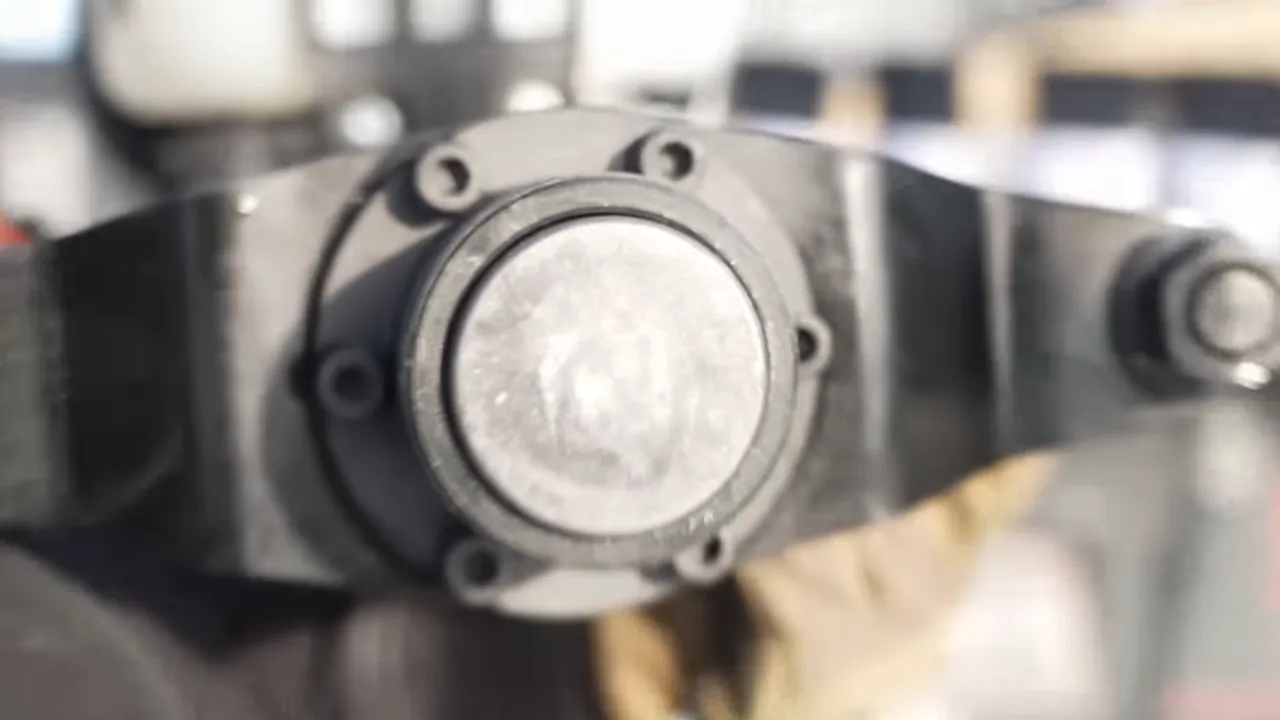
We then noticed that the Vevor's larger collar incorporated a drive cap. That cap matters with a hollow pipe because the smaller striking face could otherwise fit inside the pipe instead of transferring its blow properly to the post.
It was a useful design detail to discover before trying the larger round posts.
The Bigger Challenge: Driving 2 3/8-Inch Round Posts
The T-post comparison showed a substantial speed difference. The 2 3/8-inch round-post test showed a more serious limit.
We ran both drivers at the same time. The Rhino moved through the upper soil much faster. The Vevor struggled from the beginning.
At one point, the Vevor's post was only about 6 inches into the ground while the Rhino's was around a foot and a half down and approaching the rock layer.
Our test area has clay above a rocky layer roughly 18 inches to 2 feet below the surface. In these winter conditions, that rocky layer was also frozen. Instead of allowing the rocks to shift readily, the frozen ground made an already difficult obstacle harder.
Both machines eventually ran into resistance, but they reached very different depths. The Vevor ended up roughly a foot into the ground, while the Rhino got nearly 2 feet down into the rocky layer.
That is not a small difference when you need a fence post at a particular depth. Being able to start the post is not enough if the machine quits making useful progress long before you are finished.
How much did frozen ground affect the result?
A lot. These were tough conditions, and we should be clear about that.
We did not run a matching test in thawed spring soil, and we did not establish how the Vevor would perform in sand or another easy-driving location. A return test after the ground thaws would help separate its cold-ground limitations from its performance in more favorable conditions.
But the Rhino was working in the same general conditions. The comparison still showed a serious difference in available driving power.
Inside the Drivers: Similar Engines, Different Mechanisms
After the field testing, we took both machines into the shop. I wanted to see what was underneath those similar-looking engines.
What we found in the Vevor
Removing the Vevor's cover exposed a gear arrangement near the top of the driver. Power from the engine passes through the gears into the mechanism that cycles the piston and produces the hammering action below.
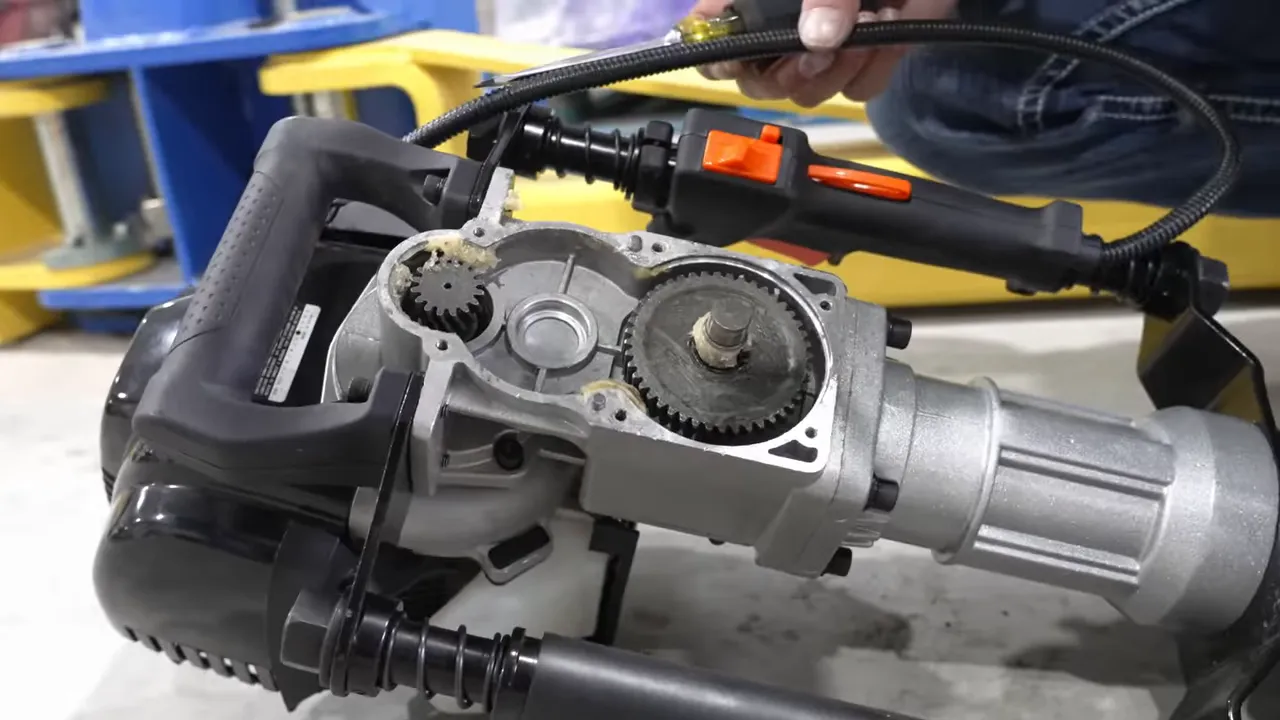
There was grease in the housing, but some of it appeared collected in places where I would not have expected it to be most useful. That raised a question about lubrication distribution. It did not prove that lubrication caused the weak performance, and we did not carry out a complete failure analysis.
This was an inspection of the mechanism, not a long-term durability test.
What was different in the Rhino
The Rhino uses a different layout, with the gear section toward the rear of the housing and a connecting-rod arrangement driving the reciprocating weight.
Comparing the castings, housings, striking surfaces, and overall construction, you could see that the professional machine had more substantial hardware. The two drivers were not simply the same tool with different engines and price tags.
Engine displacement alone is a poor way to judge a post driver's performance. The mechanism converting engine power into impacts can make all the difference. That was the biggest lesson of the side-by-side test.
Who Might Be Happy With the Vevor?
For $281, the Vevor is not useless. We proved that it could drive T-posts in the more favorable part of our test area. The question is whether your project falls within what it can handle.
I would consider it a possible option for:
- Occasional light-duty work around a house or garden.
- A small project in soft, easy-driving soil.
- Light stakes or similar work where ground resistance is low.
- A homeowner willing to accept slower progress and uncertainty in exchange for a very low purchase price.
We originally hoped it might be an affordable way into no-dig aluminum fencing. It may still have potential in favorable ground, but we did not test a complete aluminum fence installation with it. I would not promise success based on this test.
The same caution applies to tent stakes and ground rods. Those are possible light-duty uses, not applications where we established reliable performance across different soils.
Longevity and parts remain unanswered questions
I would not buy this expecting contractor-grade service life. That is a judgment based on its construction and performance, not something we proved by running it until it failed.
Parts availability is another consideration. We carry many of the service parts for the Rhino machines we use and sell. I did not establish an equivalent support path for this Vevor.
For a one-project purchase, you may be willing to accept that uncertainty. For a tool your crew needs every day, it matters a whole lot more.
Is the $281 Vevor Post Driver Worth It?
For the fencing work we do, no. It struggled too often, drove too slowly, and did not have the power we need in challenging ground.
For a homeowner with one small project and genuinely favorable soil, maybe. At less than a tenth of the price of our professional setup, it is a relatively inexpensive gamble. Just understand that it is still a gamble.
The low price is remarkable. A replacement engine for a professional driver can cost about what we paid for this entire machine. That does not make the engines interchangeable, and it certainly does not make the complete drivers equivalent.
If you need commercial-duty performance, look toward equipment such as the Rhino, pneumatic post drivers, or hydraulic drivers. Those are the kinds of tools we would keep using when driving power and dependable production matter.
The Vevor got some work done. The Rhino got substantially more done, with less fighting and in tougher material. Buy for the posts and soil you actually have, not just the opening size and engine resemblance. That is where the bargain either works out or leaves you standing over a half-driven post.


