You’re building a fence with wood posts. What are you going to set them in? Concrete, right?
That’s the answer we hear all the time. It’s also a combination we recommend against.
The problem isn’t how solid the post feels on installation day. The problem is what happens below ground, where you can’t see it. We opened up the concrete around an old pressure-treated wood post, then did the same with a galvanized steel post from a much older fence. The difference makes our recommendation pretty easy to explain.
If you’re going to set fence posts in concrete, use galvanized steel posts, not wood. Here’s why.
Key Takeaways
- Pressure-treated wood can deteriorate inside concrete even when the exposed portion remains solid.
- Gravel beneath a post does not eliminate moisture at the wood-to-concrete joint.
- The older galvanized steel post inspected remained solid, with discoloration but no visible rust.
- Compare replacement costs and service life, not just the initial price of fence posts.
A Solid-Looking Wood Post Can Hide Rot Below Ground
Our first example came from an old fence we replaced. It was a pressure-treated wood post, still surrounded by its concrete footing. From the outside, it didn’t look all that bad.
Once we peeled away a section of concrete, we could compare the exposed wood with the portion that had been buried inside the footing.
Just above the old ground line, the wood was still solid. But follow that same post down into the concrete, and the deterioration became obvious. There was decay along the buried section, with some faces in considerably worse shape than others.
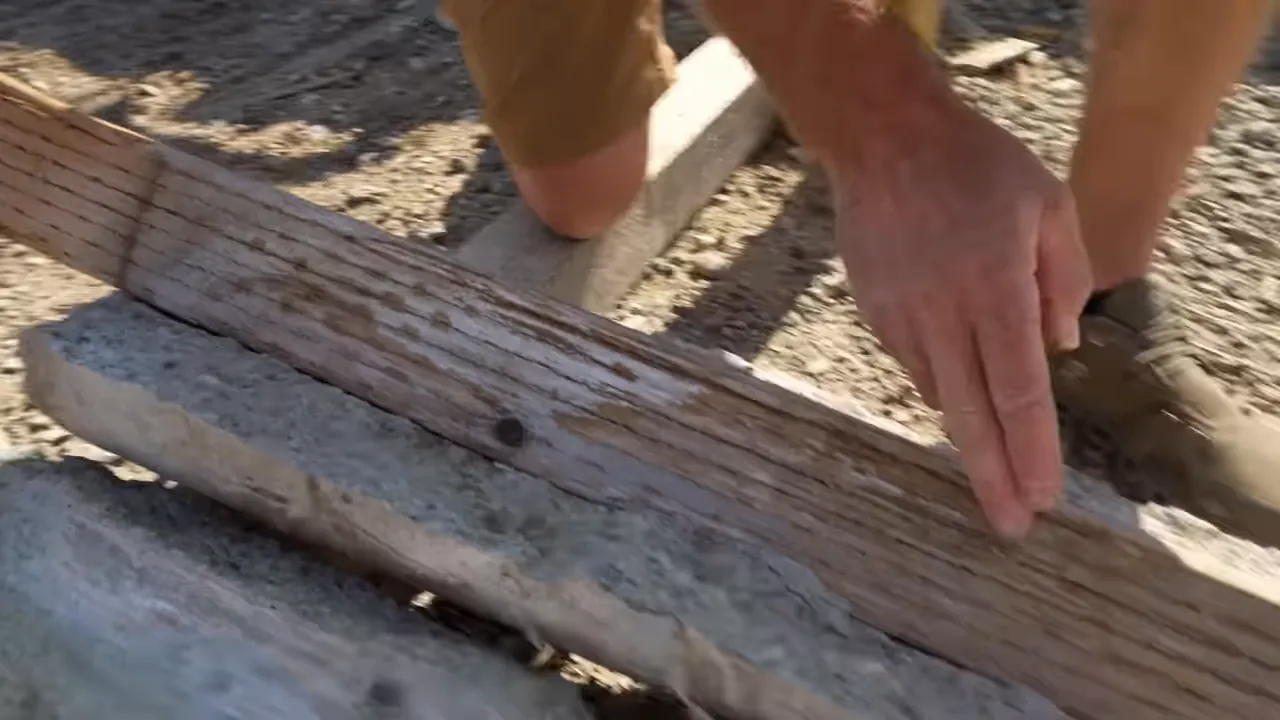
And yes, this was a treated post. That matters because pressure treatment is often treated like the end of the conversation. It isn’t. Pressure-treated wood can still rot. In this case, treatment had not prevented the buried portion from deteriorating.
We don’t know the exact installation date. Based on the post and its treatment markings, our rough guess was six to eight years. That’s an estimate, not a documented service life. The important observation is the condition: solid wood above the footing, substantial deterioration inside it.
Why the Wood-to-Concrete Joint Is the Problem
Concrete can hold a post firmly without keeping moisture away from it. Those are two different jobs.
On this post, we could see separation beginning along the top edge where the wood met the concrete. The post was still held in place, but a small gap had opened at the joint. That gives water a way in.
Once moisture gets between the wood and the concrete, it can remain against the buried wood. That wet interface is exactly what concerns us. A footing that looks tight and sturdy from above can conceal the conditions contributing to decay below.
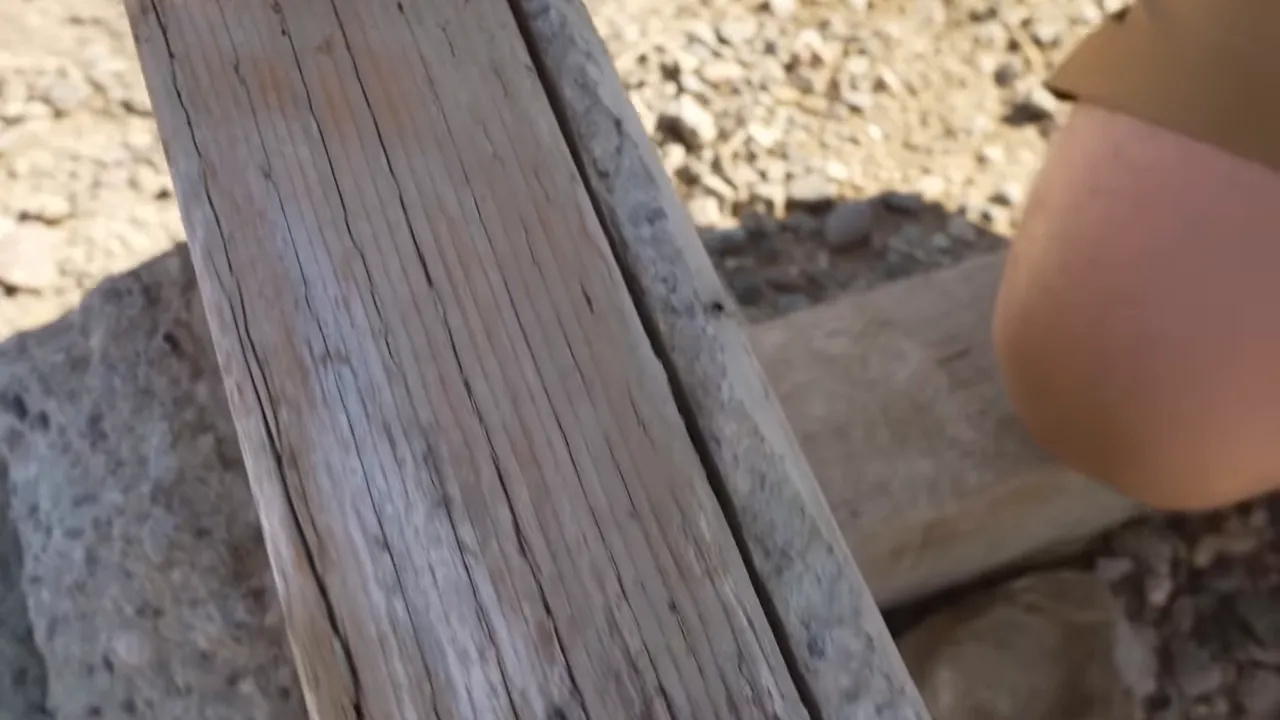
This wasn’t simply a case of concrete being loose around the post from the beginning. The inside of the concrete had captured impressions from the original pressure-treatment incisions in the wood. That’s how closely the two materials had fitted together.
It still didn’t stop the wood from rotting.
That’s why we don’t use this installation method and don’t recommend it. We often point to treated utility poles as a useful comparison: they’re much larger, and their treatment differs, but they’re commonly set in dirt rather than encased in concrete. Concrete isn’t automatically the right partner just because the post is wood and goes into the ground.
Will Gravel Under a Wood Fence Post Fix It?
Can you put gravel beneath a wood fence post before surrounding it with concrete? Sure. But that doesn’t resolve the issue we’re pointing out.
Gravel gives water somewhere to drain at the bottom. It does not eliminate the joint between the sides of the wood post and the concrete. Water can still enter that joint and keep the wood wet.
We couldn’t confirm whether the removed wood post originally had gravel beneath it. Either way, our concern remains the same: drainage underneath is not the same as keeping moisture away from the buried wood.
We would not count on a gravel base to turn a wood-in-concrete installation into a longer-lasting post system. It leaves the central problem in place.
What a Galvanized Steel Post Looked Like After About 20 Years
It’s one thing to show a deteriorated wood post and recommend steel. It’s more useful to open up an older steel footing and see what’s actually there.
For the comparison, we removed a round galvanized steel post from a commercial chain-link fence we estimated to be at least 20 years old. We hadn’t built that fence, and we didn’t know who had installed it.
The post came out of the ground more easily than we would have expected for that commercial setting. There was also dirt covering the top of the concrete. Neither detail changed what we wanted to inspect: the condition of the galvanized post at and inside the footing.
At the top of the concrete
After clearing away the soil, we found some discoloration on the pipe. What we did not see was visible rust or deterioration through the galvanized coating at the inspected area.
Discoloration isn’t the same thing as a failed post. The steel at the concrete line remained solid.
Inside the footing
We then broke the concrete open to inspect the buried section. There was a little moisture, and the discoloration extended partway down the pipe. Farther into the footing, the galvanized surface looked remarkably fresh.
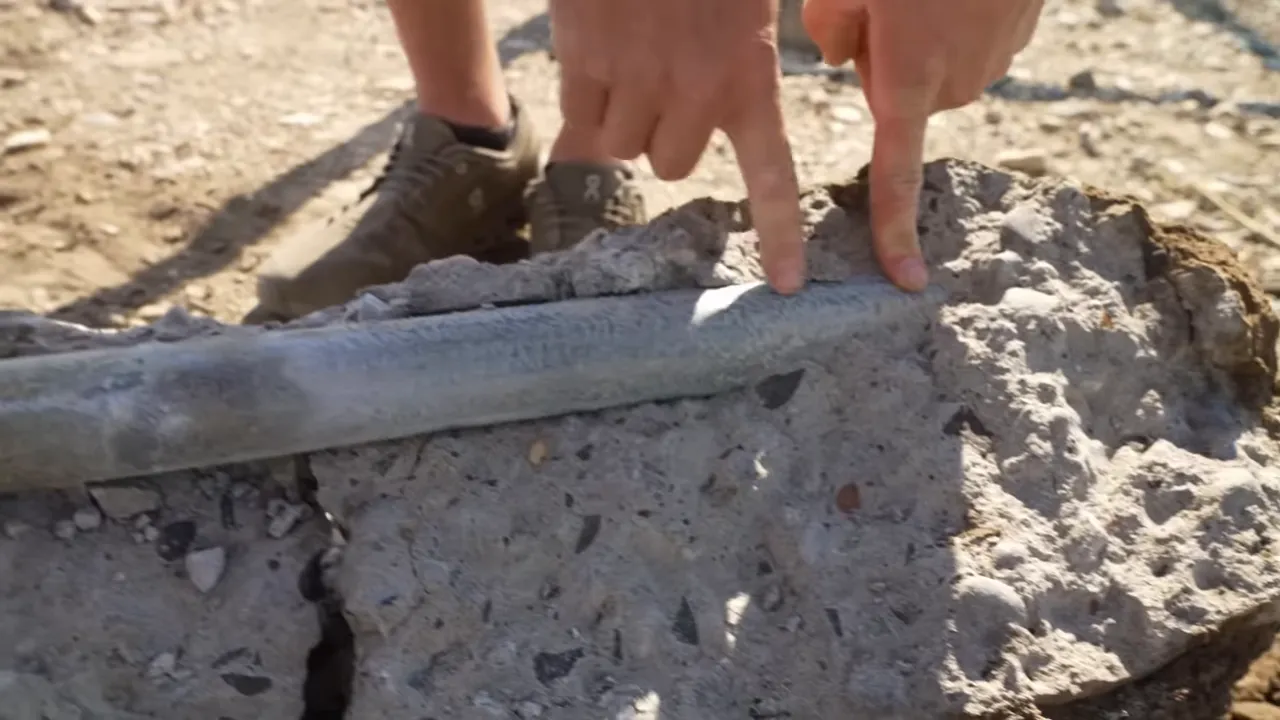
That’s the contrast worth paying attention to. The wood post had visible decay inside its concrete. The older galvanized post showed discoloration near the top, but the exposed buried section remained in good condition.
These were two removed posts with estimated ages, not a controlled lifespan test. They don’t establish an exact replacement schedule for every fence. But they show, very clearly, why we prefer galvanized steel when setting posts in concrete.
You Can Build a Wood Fence Without Wood Posts
A wood fence doesn’t have to rely on wood posts. The fencing industry has developed alternatives specifically to support wood fencing while replacing that buried wood component.
Two options we recommend considering are:
- A purpose-built steel replacement post, such as a Trident post. This gives you a post designed for use with wood fencing.
- A round galvanized pipe post with rail adapter brackets. The brackets let you attach wood rails to the steel support.
The round pipe we opened up is one example of galvanized steel, not the only shape available. Purpose-built steel replacement posts give you another way to keep wood in the fence without putting it inside a concrete footing.
Steel post systems can also be driven into the ground or set in concrete, depending on the system and installation. The point is that you have alternatives to burying a wood post in concrete.
What About the Extra Cost?
Wood may win the initial price comparison. Add up a galvanized steel post and its concrete, and a wood-post option can certainly look cheaper.
But the first installation isn’t the only cost that matters.
If you end up paying for the wood-post installation twice, that more expensive steel post starts looking a whole lot less expensive. That’s the calculation we want people to make: not just what the fence costs today, but how much useful life you get before repairs and replacement.
Is recommending steel an upsell? It is a recommendation for a better post system. The goal is longer fence life and fewer repairs, not spending more money for the sake of it.
Concrete Quantity and Post Material Are Separate Questions
We’ve also demonstrated how much concrete to use around a post, which has caused some confusion when wood appeared in that demonstration. Showing concrete quantity was not an endorsement of setting wood posts in it.
For the 12-inch-diameter hole discussed in that example, our recommendation was at least four bags of concrete per hole. That number belongs to that example, not a complete footing specification: bag weight and hole depth were not established here.
The material recommendation is separate and straightforward. When we recommend setting fence posts in concrete, we mean galvanized steel fence posts.
A tight concrete fit didn’t save the wood post we opened. Gravel underneath wouldn’t remove the wet joint along its sides. Meanwhile, the older galvanized post gave us a good look at why we recommend making the switch.
Build for the years ahead, not just for the day the concrete sets. Keep the wood in your fence, and use galvanized steel for the posts.


